Marketing
How to Monetize Email Newsletters: 6 Strategies That Turn Subscribers into Leads

Ekta Swarnkar
11/28/2023
0 min read
Monetizing a newsletter gets easier when you stop treating the list as a place to drop random offers.
A newsletter is valuable because it gathers people who have already given you permission to show up in their inbox. Some subscribers are casual readers. Some are comparing tools. Some are ready to buy, book a call, register for an event, or request a resource. The job is to match each reader's intent with a clean next step.
That is why newsletter revenue is not only about subscriber count. A small, focused list with clear offers can outperform a large list that sends every reader to the same homepage. Before choosing a monetization model, make sure each offer has a proper capture path: a signup form, resource request page, consultation page, paid checkout, sponsor inquiry page, or referral form.
If you need a simple way to collect subscriber details, qualify interest, and route newsletter clicks into follow-up, create a focused Waveon form and lead capture page for each offer instead of relying on one generic form.
This guide covers six practical ways to monetize email newsletters, when each one works, and how to connect the method to a lead or revenue path without hurting subscriber trust.
6 best ways to monetize your newsletter
The best newsletter monetization method depends on what you already have: a product, a service, expertise, audience trust, sponsor demand, or useful research. You do not need every method at once. Start with the one that fits your audience, then add more only when the newsletter can support it.
1. Sell your products or services
For product and service businesses, this is usually the strongest monetization model. Your newsletter educates the right audience over time, then invites readers to take the next step when the problem becomes urgent.
The basic flow is straightforward:
Write educational issues around problems your product or service solves.
Use examples, before-and-after stories, and customer questions to make the problem concrete.
Add a relevant CTA when the reader needs a deeper resource, template, demo, audit, or consultation.
Collect enough context to follow up properly, such as role, company, pain point, timeline, and budget range.
The mistake is pushing the same product pitch in every issue. Readers can feel when a newsletter has turned into a sales flyer. A better approach is to build a repeatable content rhythm: one issue teaches, one issue shares proof, one issue handles objections, and one issue offers a useful next step.
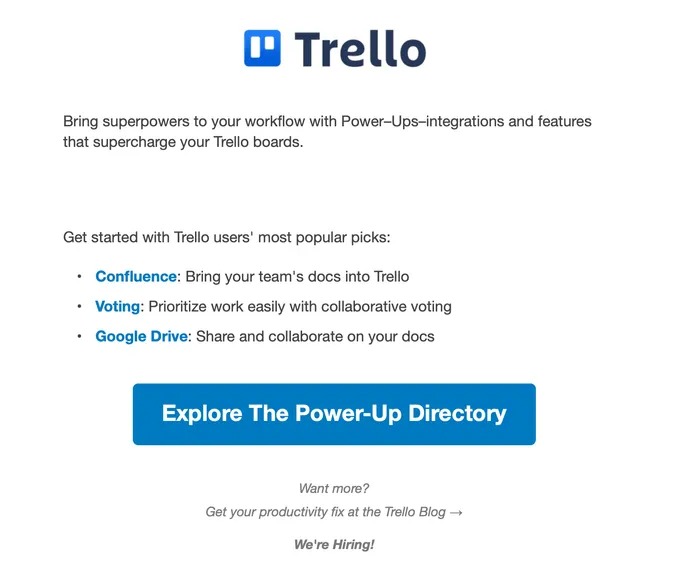
Here is an example of a course creator promoting a special offer to subscribers:
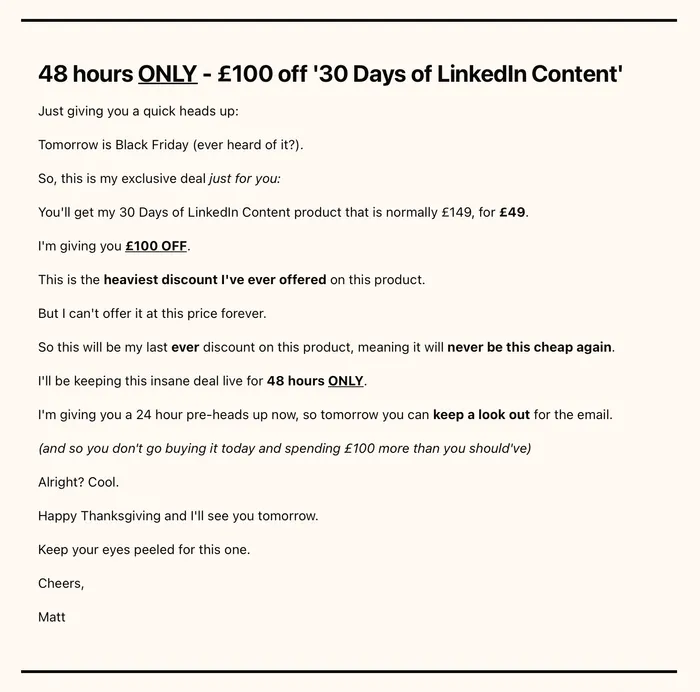
Outside of seasonal campaigns, newsletters work well as part of a sales funnel. A reader clicks because the topic matters now. Send that click to a specific page that matches the promise, not to a broad homepage where the reader has to figure out what to do next.
For example, a newsletter about reducing manual inbound work can point to a page that offers a workflow checklist and asks a few qualifying questions. A newsletter about a consulting topic can point to a consultation or inquiry page. A newsletter about templates can point to a resource request form. The more specific the page, the easier it is to measure whether the newsletter created real demand.
2. Create a paid newsletter
A paid newsletter turns expertise into recurring revenue. It works best when readers believe your analysis, curation, or access saves them time or helps them make better decisions.
For example, subscribers pay to read premium industry analysis from creators such as Michael Spencer's AI Supremacy.

Paid newsletters are not only for large creators, but they do require trust. If the audience does not already know why your point of view matters, asking for payment too early can slow growth. In that case, keep the main newsletter free and add a premium tier later.
A practical structure is:
Free tier: useful public insights, summaries, and lighter analysis.
Premium tier: deeper research, templates, private Q&A, database access, deal flow, or tactical teardown content.
Lead tier: a request form for teams that want a workshop, audit, or custom implementation.
This lets you monetize without forcing every subscriber into a checkout. Some readers will pay for content. Others will become business leads later.
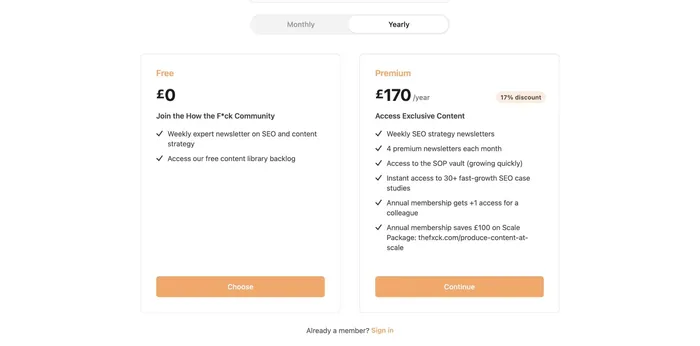
Ben Goodey's SEO newsletter is an example of a free and paid content mix:
If you already have a newsletter, do not suddenly lock everything behind a paywall. Test a paid add-on first. Track which topics drive clicks, replies, and repeat interest. Those signals tell you what people may pay for.
3. Sell ad space to sponsors
Sponsorship can work well when your newsletter has a clear audience and consistent engagement. Sponsors are not only buying subscriber volume. They are buying access to a specific group of people who trust your curation.
A sponsored placement can be a short block inside a regular issue:
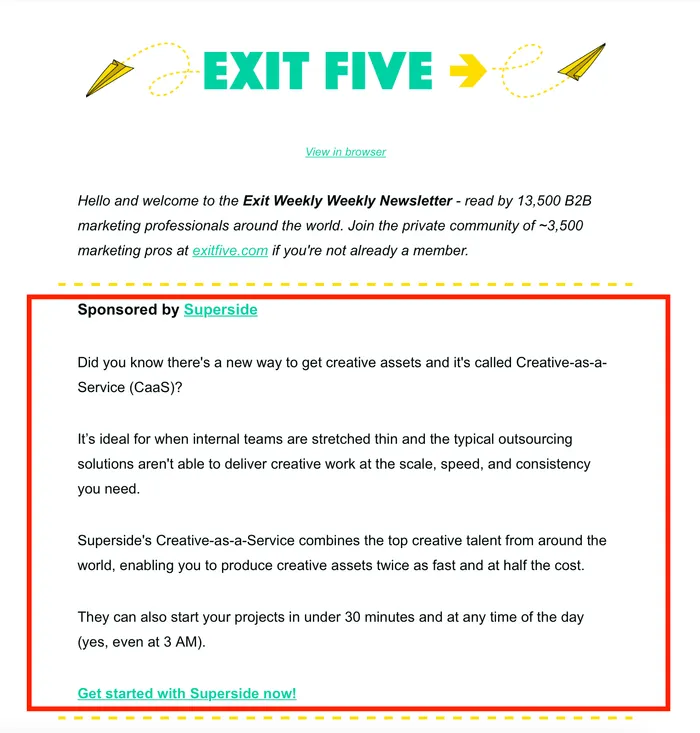
To make sponsorship attractive, prepare a simple sponsor page or media kit. Include the newsletter topic, audience profile, subscriber count, average open rate, average click rate, past sponsors, available placements, and contact form. This is where many newsletters lose deals: interested sponsors click around and cannot find a clean way to inquire.
If you are ready to sell sponsor slots, send sponsor traffic to a dedicated form. A lead capture page for sponsor inquiries can ask for company name, campaign goal, target market, budget range, desired date, and creative assets. That gives you a stronger starting point than a blank email thread.
If you have not received inbound sponsor requests yet, you can still pitch brands that fit your audience. The fit matters. A random high-paying sponsor can damage reader trust faster than it grows revenue.
4. Promote sponsored emails
A sponsored email gives a partner a larger share of attention than a small ad block. Instead of adding a sponsor note inside your issue, the whole issue is built around the partner's story, offer, or educational angle.
This can work when the partner offers something useful to your readers and the message still feels like it belongs in your newsletter. It is risky when it reads like outsourced copy that could appear in any inbox.
Imagine you run a content marketing newsletter and partner with an SEO consultant. The sponsored email could teach readers how to convert search traffic into qualified leads, then invite them to download a checklist or join a workshop. That gives readers value before the partner makes an offer.
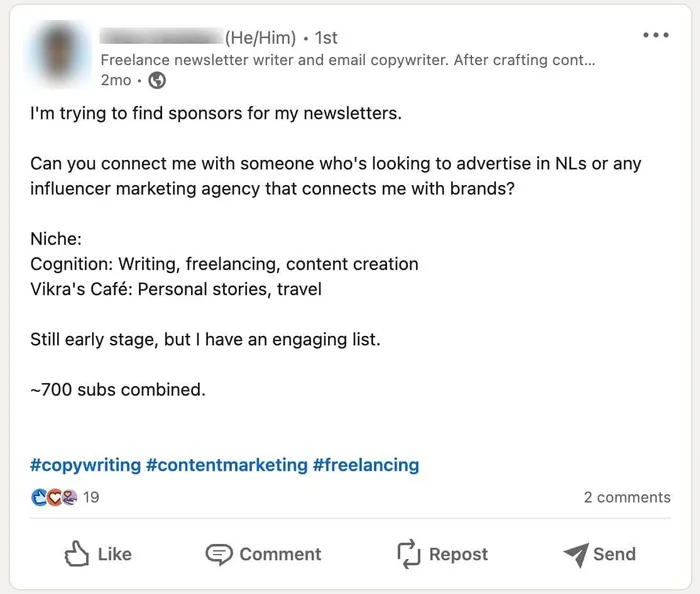
Here is an example of a newsletter collaboration between SEO and copywriting audiences:
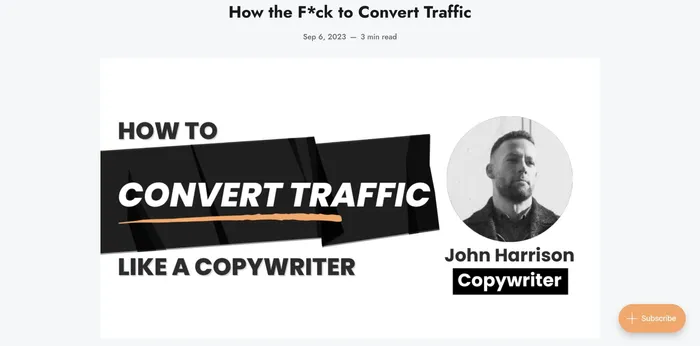
For sponsored emails, protect two things: editorial fit and measurement. Agree on what the sponsor can say, how you will label the sponsorship, where the CTA goes, and what data you can share afterward. If the CTA is a download, event, waitlist, or consultation request, use a dedicated landing form so the sponsor can see real intent instead of only clicks.
5. Promote affiliate products
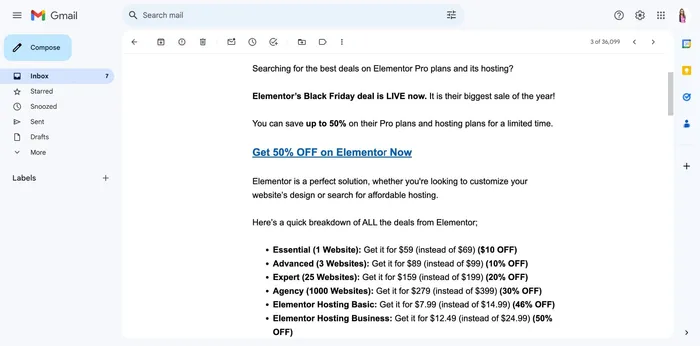
Affiliate marketing gives you more control than sponsorship because you choose what to recommend and when to recommend it. You earn a commission when subscribers buy through your link.
It works best when the recommendation is genuinely useful. A newsletter about small business operations can recommend tools it has tested. A developer newsletter can recommend hosting, analytics, or productivity products. A marketing newsletter can recommend templates, courses, or software that fit the problem being discussed.
Here is how affiliate promotion can appear inside a newsletter:
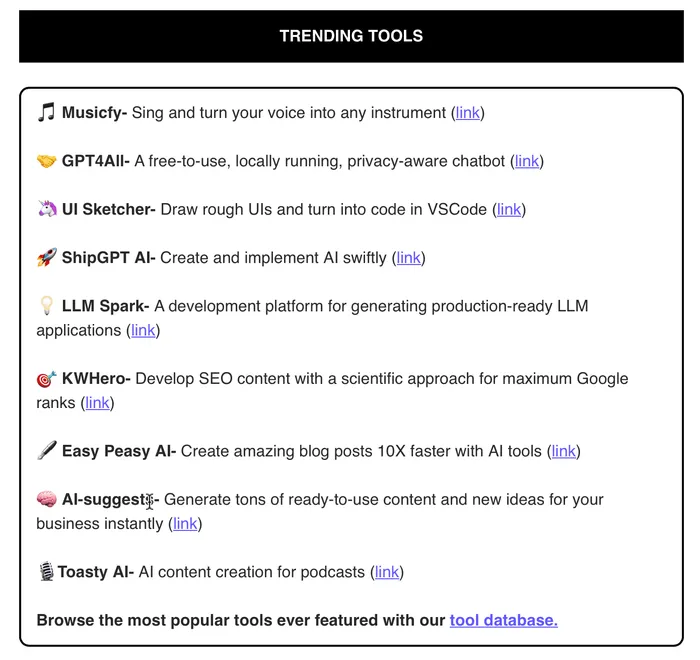
The danger is overuse. If every issue contains an affiliate link, readers will start to question the editorial judgment. Keep a short internal rule: only recommend products that match the issue, disclose the relationship, and explain why the product is useful for that reader.
Affiliate campaigns also benefit from segmentation. A beginner may need a starter tool. An advanced subscriber may need a different comparison, template, or implementation checklist. Use newsletter clicks and form submissions to learn which segment is responding instead of sending the same offer to everyone.
6. Add tip links or supporter options
If you do not have a product, service, sponsor pipeline, or affiliate model yet, tip links can still create a small revenue stream. This is common for research-heavy newsletters, independent creators, job boards, and community newsletters.
Tip links work when readers feel the work is clearly valuable. The value can come from original research, hard-to-find opportunities, thoughtful curation, or a perspective they cannot get elsewhere.
For example, Kaitlyn Arford curates freelance opportunities for subscribers:
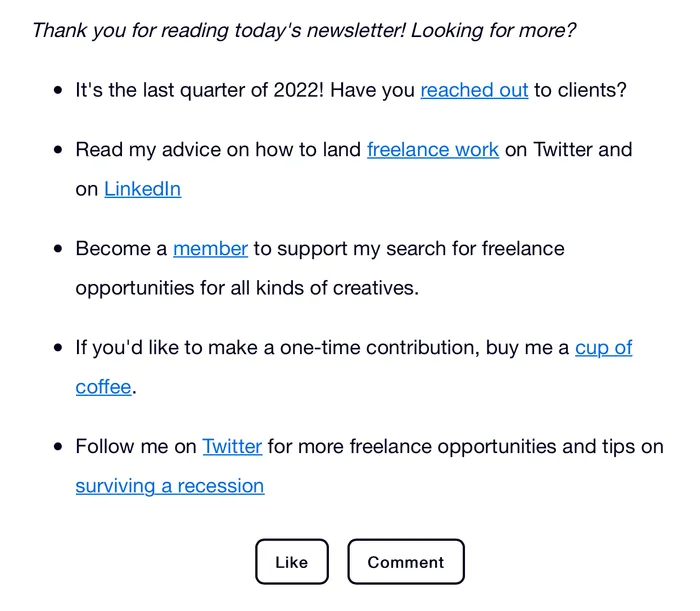
Place a tip link where it does not interrupt the reading experience, usually near the sign-off or in a recurring support section. Keep the wording simple. You are giving readers an option, not forcing a transaction.
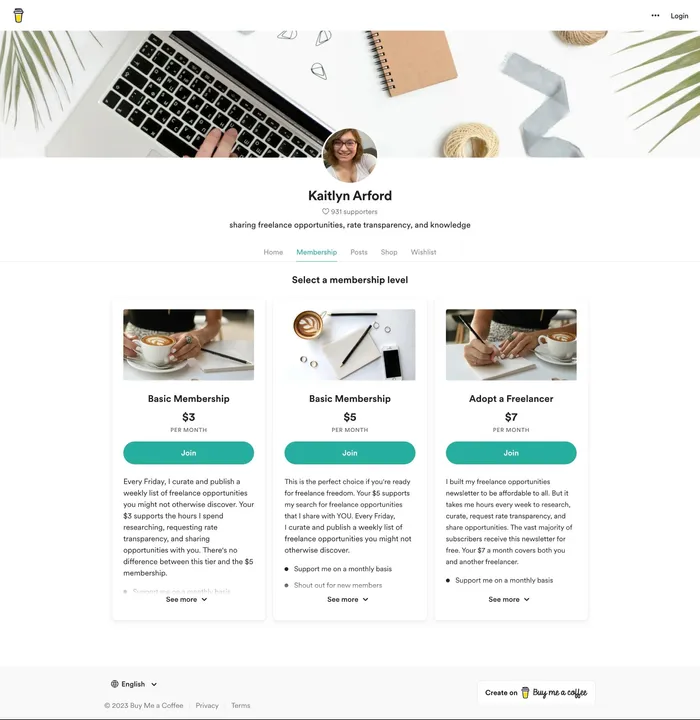
Supporter options can also become a bridge to paid memberships. If readers repeatedly support a free newsletter, that may be a signal to test a premium archive, private community, or paid research tier.
Choose the monetization method by subscriber intent
The cleanest way to pick a monetization model is to look at why people subscribe.
If they subscribe to solve a business problem, sell a product, service, audit, or consultation.
If they subscribe for expert judgment, test paid content or a premium tier.
If they subscribe because you gather a hard-to-reach audience, sell sponsorships.
If they subscribe for trusted recommendations, test affiliate offers carefully.
If they subscribe because they appreciate your independent work, add supporter options.
You can combine several methods, but do it slowly. A healthy newsletter may sell a product one week, publish a sponsor placement another week, and share a free resource the next. That rhythm keeps the newsletter useful instead of making every issue feel like a transaction.
Turn newsletter clicks into measurable leads
The monetization method matters, but the post-click experience matters just as much. A subscriber who clicks from an email has context. They clicked because a specific sentence, offer, sponsor, or example matched something they care about. Do not waste that intent.
Use a dedicated page for each important CTA:
A resource request page for guides, checklists, templates, and benchmarks.
A consultation page for audits, demos, service inquiries, and sales conversations.
A sponsor inquiry page for media kit requests and campaign proposals.
A webinar or event registration page when the newsletter promotes a live session.
A waitlist page when the offer is not ready to sell yet.
With Waveon forms and lead capture pages, you can create those destinations without building a full website flow for every campaign. Use different fields for different offers, connect the page to your campaign, and review which newsletter issue produced useful submissions.
If you also need the email workflow side, compare newsletter and email platforms in this guide to newsletter automation tools. Then connect the email campaign to a capture page that records what the reader wanted.
Maximize revenue without burning trust
Each monetization method has tradeoffs. Product CTAs can generate high-value leads, but too many pitches will tire readers. Paid tiers can create recurring revenue, but they need a clear reason to pay. Sponsorships can scale, but poor sponsor fit can weaken the newsletter. Affiliate offers can be useful, but only when readers believe the recommendation is honest.
The safest path is to build a simple revenue mix. Keep the newsletter useful first. Add offers that fit the issue. Send each offer to a clear destination. Track clicks, form submissions, replies, and actual sales. Then double down on the method that produces revenue without lowering trust.
Newsletter monetization is not a one-time setup. It is an operating rhythm: publish useful issues, learn what readers want, create better offers, and make the next step easy when someone is ready.
👉 Email Marketing Explained: 5 Strategies for Subscribers, Leads, and Sales
Learn more about No-code insights
Subscribe Waveon Newsletter
*Type your email address