Insight
7 Best Practices for Effective Inventory Management

Waveon Team
2/7/2025
0 min read
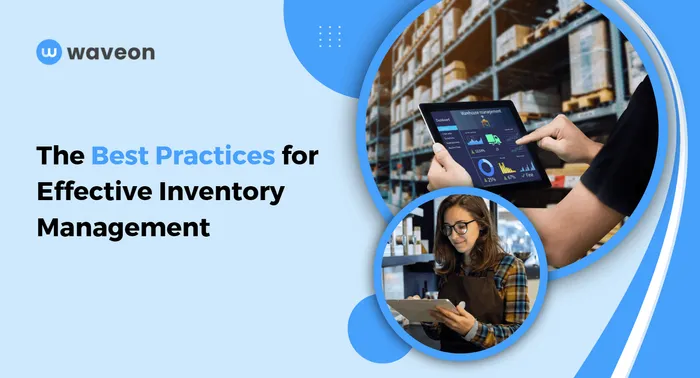
Inventory management is one of the most crucial parts of business operations for product-based companies. However, it is also the most challenging one.
Knowing when to order new stock, how much to order, and how to store and manage inventory takes years of experience. Even experienced managers face issues such as overstocking, understocking, or inaccuracy between actual and recorded inventory numbers.
Following the best practices for inventory management can help improve your processes and overcome such challenges. It will not only reduce the chances of errors but also positively impact your business finances and operations.
So, what are these best practices for effective inventory management? Let’s find out.
Inventory Management Best Practices to Avoid Overstocking or Understocking
Here are some of the crucial best practices for inventory management you should follow to streamline your processes and meet customer demands at all times.
1. Use Batch Tracking
Batch tracking is a method that lets you track groups of products with shared characteristics, such as production date, expiration date, or supplier.
Assign a unique identifier (batch number) for each batch, making it easier to monitor stock movement, quality control, and regulatory compliance. Ensure you assign batch numbers when you receive the inventory so that each order will be one batch. This helps implement the FIFO stock control methodology to ensure you sell the old stock first.
2. Conduct Regular Inventory Audits
The practice of conducting regular audits acts as health checks for your inventory management process. It helps you identify discrepancies and ensure your inventory levels are on point.
There are three types of inventory audits you should conduct:
Cyclic counts: Instead of counting your entire inventory at once, cycle counting breaks it into smaller sections. Count a portion of your stock every week, month, or at a timeframe of your choice.
Physical counts: This involves counting your entire inventory, typically at the end of a fiscal year to see if the actual and recorded numbers match.
Spot checks: These are random audits you can conduct at a specific location warehouse or of a specific product. You can do spot checks when you suspect an issue or even otherwise.
Periodic audits help identify issues early 一 before they turn into bigger problems. You can then take measures to quickly fix these issues and optimize your workflow.
3. Use Inventory Management Software
No matter how flawless your inventory management process is, it can always benefit from a specialized software solution. Inventory management solutions make things faster, easier, and more accurate since they can help you automate tasks and reduce human error.
Leverage a software solution that automates various aspects of inventory management and allows you to create custom workflows.
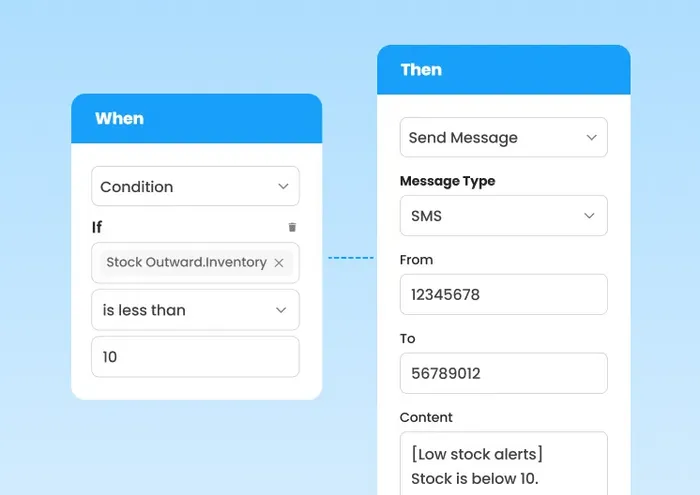
Waveon, for example, is an inventory management system that offers great automation features. You can create custom automated workflows for stock re-ordering and set conditions for receiving low-stock alerts as notifications, as shown below.
4. Prepare for Peak Seasons
One of the biggest challenges in inventory management is meeting the high demand during peak seasons. That’s why we recommend preparing in advance by studying historical sales patterns.
Use demand forecasting to predict inventory requirements for high-demand periods and stock your products beforehand to meet those seasonal demands.
While studying historical sales patterns manually can be time consuming and often lead to human-error inaccuracies, inventory management systems can predict seasonal sales more accurately and in less time. So, set up your system today to get real-time updates based on past and present data.
5. Set Reorder Points and Keep Safety Stock
Set a threshold for low stocks which triggers automatic reorders or sends you alerts. In either case, you can restock quickly when your stocks drop below a certain level.
Automatic reordering involves ordering products as soon as they reach a certain threshold. This ensures you never run out of stock, even in fluctuating demand.
Waveon allows you to create a workflow for automatic reordering using conditional logic. Here’s an example:
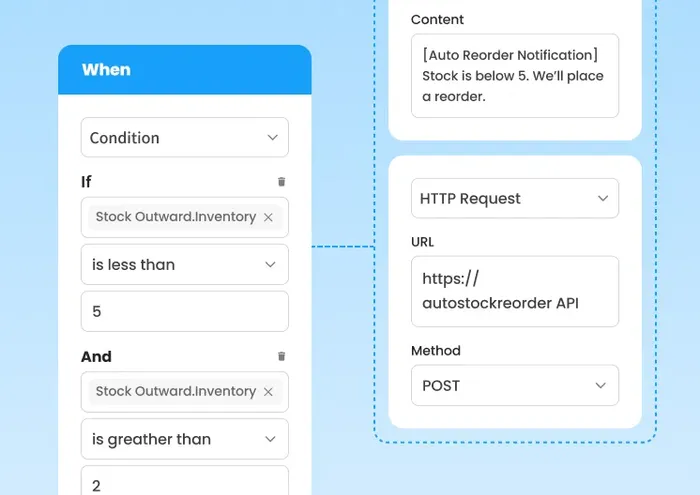
The reorder point could differ from product to product, depending on how fast-selling each product is.
You should also maintain safety stock at all times, which acts as a buffer in cases of unexpected rises in demand.
For distributors looking for a straightforward way to set reorder points and track purchase orders in one place, StackCube offers a lightweight alternative to complex ERP systems.
6. Use the Right Stock Control Method for Your Business
There are numerous stock control methods that you can use for inventory management. We recommend choosing one or two that work best for your organization. Don’t try to do too much, but choose what suits your needs.
Here are some options to choose from:
Just in Time (JIT) involves reordering stock only when needed. This method helps reduce storage costs and is most effective for manufacturing firms that order raw materials as needed.
First-in-first-out (FIFO) method involves shipping out old stock first to prevent products from going bad or expiring. This is especially useful for perishable goods or products with short shelf lives.
ABC method involves grouping inventory into three categories based on value and quantity required, such as high-value items that need to be ordered in low quantity or vice versa.
Economic Order Quantity (EOQ) method minimizes inventory cost by calculating the perfect order quantity for each product.
Fixed Order Quantity (FOQ) system allows you to order only up to a specific quantity for a product. It prevents wastage of resources and help you cut down unnecessary storage costs.
These are some popular stock control methods. There are others too. Do your research and find the one that best suits your business needs and the nature of your products (shelf life, demand, etc.).
7. Maintain Great Supplier Relationships
This is a less talked about practice for effective inventory management. Building great relationships with suppliers can be really helpful in the times of need.
If you have a good working relationship, they will likely accommodate your urgent inventory restocking needs. They will often prioritize your orders over others.
Here are some tips to build better supplier relationships:
Keep suppliers informed about your inventory needs, demand changes, and expectations to avoid misunderstandings.
Always make your payments on or before time. This may also help you negotiate better payment terms and profit margins.
Be reliable and consistent by placing steady orders over time to become one of their valued clients.
Make sure you always treat them with respect, even in case of conflict or delays.
Commit to long-term contracts to get more flexible order schedules and priority treatment.
Ready to Ace Inventory Management and Keep Up with Fluctuating Demands?

If you’ve been struggling to managing your inventory and often face overstocking or understocking issues, then following these best practices will help. We also recommend you invest in a good inventory management system like Waveon.
No-code system: It is easy to use and helps you save development costs and time.
Flexible customization: With templates and modules, its easy to adjust the system for different industries and companies.
Cost-effective: Budget-friendly and easy to scale up with your growing business needs.
Manage your inventory with Waveon!
Discover our customer stories on this topic
Learn more about No-code insights
Subscribe Waveon Newsletter
*Type your email address