Insight
What Is Safety Stock? How to Calculate and Manage Buffer Inventory (2026)

3/18/2026
0 min read
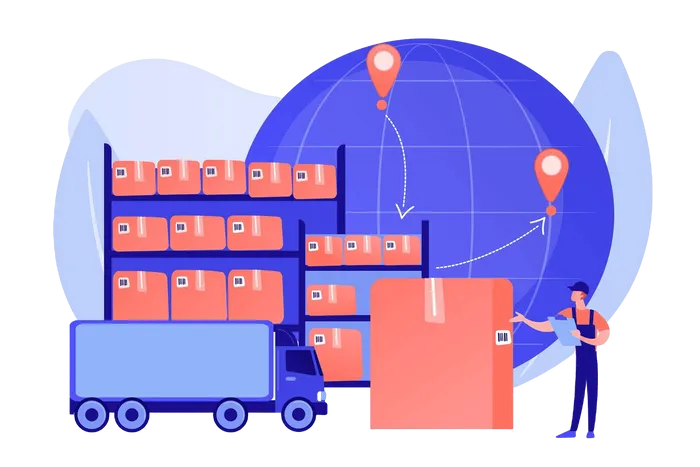
You thought you had enough inventory — then an unexpected order spike hit and you were out of stock. Or maybe the opposite: you overstocked "just in case" and watched storage costs eat into your margins. Safety stock is the buffer that prevents both extremes.
This guide explains what safety stock is, how to calculate it, and — more importantly — how to build an operational structure where it actually works.
What Is Safety Stock?
Safety stock is extra inventory held as a buffer against uncertainty — unexpected demand surges, supplier delays, or lead time variability. It's the cushion that keeps you from running out of stock when things don't go as planned.
But safety stock isn't about piling up more inventory. The real question is: why does stockout keep happening, and where in your operations is visibility breaking down?
Two factors drive safety stock calculations:
Demand variability — how much actual demand fluctuates from your forecast
Lead time variability — how much actual supplier delivery times deviate from the expected schedule
How to Calculate Safety Stock
The most commonly used formula is:
Safety Stock = Z × σD × √L
Z = service level factor (Z-score)
σD = standard deviation of demand (demand variability)
L = lead time (in the same time unit as demand data)
The Z-score represents how much buffer you want above average demand. It's tied to your target service level — the percentage of orders you want to fulfill without stockout.
| Service Level | Z-Score | Stockout Risk |
|---|---|---|
| 90% | 1.28 | 10% |
| 95% | 1.65 | 5% |
| 99% | 2.33 | 1% |
A higher Z-score means more safety stock and lower stockout risk — but also higher holding costs. Most small businesses start with a 95% service level and adjust from there.

NetSuite's safety stock guide — one of many resources on buffer inventory calculation
Important: The formula only works if your demand and lead time data are reliable and centralized. If sales data lives with the sales team, lead times with procurement, and inventory counts in a separate spreadsheet, the calculation might be accurate but operationally useless.
When Safety Stock Matters Most
Seasonal Demand Spikes
Apparel businesses face spring/fall rushes. Food and beverage companies see summer surges. If you sell seasonal products, your safety stock levels should increase ahead of peak periods — not during them, when it's already too late to reorder.
Promotions and Product Launches
Running a discount campaign with no inventory to back it up wastes your marketing spend. Companies like Starbucks use historical sales data, weather patterns, and local events to forecast demand spikes and pre-position safety stock before promotions — ensuring they can fulfill orders when demand peaks.
Supplier Reliability Issues
If your supplier's average lead time is 14 days but occasionally stretches to 21, that 7-day gap is where stockouts happen. Safety stock absorbs this variability. The less reliable your supply chain, the more buffer you need.
What Happens When Safety Stock Is Managed Well
When businesses implement proper safety stock policies with data-driven adjustments, the results are measurable:
| Metric | Before | After |
|---|---|---|
| Monthly stockout rate | ~5% | <1% |
| Inventory turnover | 5x/year | 7.5x/year |
| Storage cost | baseline | -10% |
The key insight: safety stock doesn't just prevent stockouts. When paired with better demand forecasting, it actually reduces total inventory by eliminating panic over-ordering and excess buffer that nobody adjusts.
Safety Stock Only Works If Reordering Is Connected
Setting a safety stock level is the easy part. Maintaining it is where most businesses fail.
When inventory drops below the safety threshold, a reorder needs to happen immediately. But in many small businesses, the process looks like this:
Someone checks inventory in a spreadsheet
They manually scan for items below the threshold
They send a reorder request via email, chat, or phone
Every day of delay in this cycle adds to your lead time — and that's exactly where stockouts happen. If the person responsible is on leave, busy, or simply forgets, the safety stock buffer gets consumed before the reorder arrives.
For safety stock to actually work, two things must be connected:
Real-time inventory monitoring — not yesterday's spreadsheet, but current stock levels
Triggered reordering — when stock hits the threshold, a purchase order goes out automatically or with one click
When inventory data and ordering live in separate tools — stock in one spreadsheet, orders via chat, settlement in another file — even perfectly calculated safety stock levels fail because the trigger-to-action loop is broken.

Safety Stock Is an Operational Rule, Not a One-Time Calculation
The formula gives you a number. But that number needs to live inside your operations as a rule that gets executed consistently:
Who monitors stock levels against the threshold?
What triggers a reorder — a daily check or an automatic alert?
How quickly does the reorder reach the supplier?
When do you review and adjust safety stock levels — quarterly? After every promotion?
If these questions don't have clear answers in your organization, safety stock becomes a number in a spreadsheet that nobody looks at until something goes wrong.
The businesses that manage safety stock well aren't the ones with the most sophisticated formulas. They're the ones where inventory data, reorder triggers, and supplier communication flow through a single system — so the right action happens at the right time without depending on someone remembering to check.
Getting Started with Safety Stock
You don't need an enterprise ERP to implement safety stock. Start with these steps:
Identify your top 20% SKUs by revenue. These are where stockouts hurt most. Apply safety stock here first.
Gather demand and lead time data. Even 3–6 months of history is enough to calculate meaningful standard deviations.
Set a 95% service level as your starting point. Adjust per SKU based on margin and criticality.
Connect inventory monitoring to reordering. The gap between "seeing" that stock is low and "acting" on it is where most failures happen.
For a deeper look at inventory fundamentals, see our guide: What Is Inventory Management? A Beginner's Guide for Small Businesses.
If you need a system where inventory levels, safety stock thresholds, and supplier orders are connected in one place — Waveon's inventory management template lets you set this up without building from scratch.
Try Waveon's inventory management template for free →
Related reading:
Learn more about No-code insights
Subscribe Waveon Newsletter
*Type your email address