Insight
What Is a SKU? How to Create and Manage SKU Codes for Your Business (2026)

3/18/2026
0 min read

If you manage physical products — whether you sell online, run a warehouse, or handle B2B orders — you've probably encountered the term SKU. But many small businesses either skip SKU codes entirely or create them inconsistently, leading to inventory confusion down the line.
This guide explains what SKUs are, how they differ from UPCs and barcodes, and how to build a simple SKU system that actually scales.
What Is a SKU?
A SKU (Stock Keeping Unit) is an alphanumeric code that uniquely identifies a product in your inventory. Unlike universal codes like UPCs, SKUs are created internally by each business — meaning you define the format, structure, and naming conventions.
A well-designed SKU encodes key product attributes: brand, category, color, size, or any characteristic that matters for your operations. This makes it possible to track inventory, analyze sales data, and streamline fulfillment without relying on product names alone.
SKU vs UPC vs Barcode
| Code Type | Description | Who Defines It |
|---|---|---|
| SKU | Internal product identifier using letters and numbers | Your business |
| UPC | Universal Product Code — a standardized 12-digit number used across all retailers | GS1 (global standard) |
| Barcode | A visual, scannable representation of a UPC or other code | Generated from UPC/SKU |

GS1 manages the global barcode standards that power UPC codes worldwide
Key difference: A UPC is the same for a product regardless of which store sells it. A SKU is unique to your business — two different retailers will have different SKUs for the exact same product.
Why SKUs Matter for Small Businesses
Without SKUs, you're identifying products by name, description, or memory. That works with 10 products. It breaks at 100. Here's what SKUs enable:
Accurate inventory tracking — know exactly what's in stock, where, and how fast it moves
Faster fulfillment — warehouse staff can locate items by code instead of searching by description
Sales analysis by variant — see which specific size, color, or configuration sells best
Reorder planning — track stock levels per SKU to set reorder points and avoid stockouts
Supplier communication — reference specific items unambiguously in purchase orders
SKUs are used across retail stores, e-commerce platforms, warehouses, and catalog-based businesses. Amazon actively encourages sellers to create their own SKUs to manage listings and track sales effectively.

Amazon's seller guide explains how SKUs help ecommerce sellers manage inventory
How to Create SKU Codes
A good SKU is short, readable, and encodes the attributes you care about. Here's a simple format:
Example: AD-BRA-BLK-2X
AD— Brand (Adidas)BRA— Product type (Bra)BLK— Color (Black)2X— Size (2XL)
SKU Design Principles
Length: Aim for 4–8 characters, 16 max. Shorter codes are easier to scan and type.
Use hyphens to separate sections — improves readability for humans
Be consistent: Every SKU should follow the same structure. If brand comes first for one product, it should come first for all.
Avoid ambiguous characters: Don't use
O(letter) and0(zero) interchangeably, orIand1.Start with letters, not numbers: Some systems treat leading zeros differently.

Shopify's SKU guide covers best practices for creating and managing product codes
Manual vs Automated SKU Generation
If you have fewer than 50 products, manually creating SKUs with a consistent naming convention works fine. Once you're managing hundreds of SKUs across multiple categories, sizes, and suppliers, use inventory management software or an ERP system to auto-generate and maintain them.
SKU Management Strategies That Drive Results
1. Prevent Stockouts and Overstock
Track inbound and outbound movements per SKU. When a SKU's stock drops below a threshold, trigger a reorder. When a SKU hasn't moved in 90 days, flag it for clearance. This is basic inventory management — but it only works if your SKU data is clean.
2. Improve Demand Forecasting
Analyzing sales patterns at the SKU level — not just the product level — reveals which variants actually sell. You might find that a t-shirt sells well overall, but only in two of five available colors. SKU-level data lets you order smarter and negotiate better with suppliers.
3. Speed Up Customer Service
When a customer asks about a specific item, SKU lookup is instant. No scrolling through product lists or guessing which "blue shirt" they mean. In retail and e-commerce, this directly impacts response time and customer satisfaction.
4. Enable Multi-Channel Selling
If you sell on your own website, Amazon, and a physical store, a consistent SKU system lets you track the same product across all channels. Without it, you end up with duplicate listings and inventory mismatches.
When SKU Spreadsheets Hit Their Limit
Most small businesses start managing SKUs in a spreadsheet — and that's fine initially. But the system starts to crack when:
The same product appears under different codes because someone typed it differently
Supplier pricing per SKU is tracked in a separate file that's always outdated
Stock counts in the spreadsheet don't match what's physically in the warehouse
You can't connect a SKU to its purchase orders, deliveries, and invoices in one view
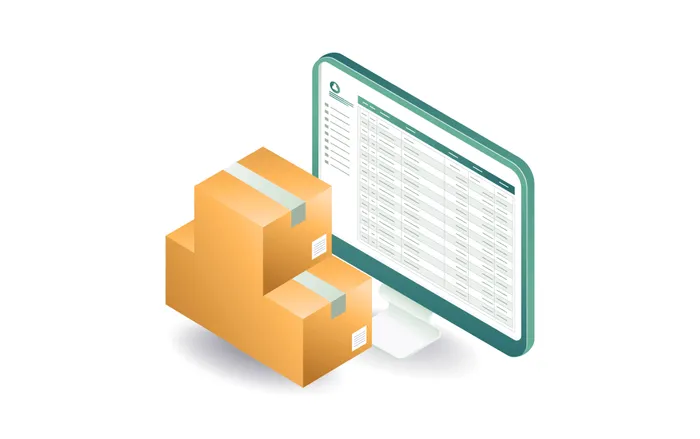
The underlying issue is that a spreadsheet treats SKUs as static data. In reality, a SKU is the anchor point for a chain of operations: product master → inventory tracking → purchase orders → supplier pricing → fulfillment → settlement.
When these steps live in disconnected files, every handoff introduces errors. A proper system connects them — so registering a SKU automatically links it to stock levels, supplier prices, and order history.
Building a SKU System That Scales
Whether you use a spreadsheet or dedicated software, get these foundations right:
Define your SKU format before you start. Document the structure (e.g., Brand-Category-Attribute-Size) and share it with your team.
Create a product master list. Every SKU, its attributes, supplier info, and pricing in one place. This is your single source of truth.
Connect SKUs to inventory counts. Every stock movement (in or out) should reference a SKU — not a product name.
Link SKUs to purchase orders. When you order from a supplier, the PO should reference SKUs so receiving and reconciliation are straightforward.
For a deeper look at managing inventory with templates, see our guide: Free Inventory Management Excel Templates for Small Businesses.
If you need a connected system where SKUs, inventory, orders, and supplier management work together — without building from scratch — Waveon's inventory management template gives you a working foundation in days.
Try Waveon's inventory management template for free →
Related reading:
Learn more about No-code insights
Subscribe Waveon Newsletter
*Type your email address