Insight
7 ERP Trends to Watch Out for in 2025

Waveon Team
2/17/2025
0 min read
Enterprise resource planning (ERP) platforms are evolving rapidly and many ERP trends will dominate the market in 2025. From using artificial intelligence to switching toward cloud-based and no-code platforms, the industry is embracing technology like never before.
Staying updated on and embracing these ERP trends can give you an edge over your competitors. This is especially important if you’re still using a traditional ERP system with high deployment costs, slow implementation, and limited flexibility.
Read on to find out what’s next in ERP and the technologies you must adopt to keep up with the current trends.
7 ERP Trends That Will Dominate in 2025 and Beyond
Here are our top picks for ERP trends that will benefit your supply chain and boost your overall operational efficiency.
1. Major Switch to Cloud-Based ERP Systems
Cloud-based ERP systems offer numerous benefits over traditional systems, driving many businesses to switch to these.
The global cloud ERP market grew from $49.80 billion in 2023 to $57.17 billion in 2024 and is expected to reach USD 181.04 billion by 2032. This shows that cloud platforms are gaining more traction and will continue to do so.
Here are some key benefits of cloud ERP systems driving this shift:
Lower upfront costs: You don’t need to spend on hardware and maintenance as the vendor handles that.
Faster implementation: Any feature updates or customizations are quick to implement as they don’t require any hardware changes.
High scalability: You can add more modules and functionality without worrying about implementation as that’s done at the vendor’s end.
Remote access: You can access data remotely across teams/departments while controlling who can access the data.
2. Increased Use of Artificial Intelligence in ERP Systems
Many ERP software solutions now use AI technology to offer advanced resource management capabilities, such as predictive analytics and demand forecasting.
According to a recent report, the global AI in ERP market is set to reach $46.5 billion by 2033, up from $4.5 billion in 2023. Clearly, the trend will continue to grow.
Using AI has led us to more advanced ERP systems that provide more accurate data and better insights. AI analyzes large data sets and provides in-depth analytics, which helps you make data-driven business decisions.
Here are some benefits of using AI-enabled ERP systems:
Automated processes and workflows
Better insights from big data analytics
Improved reporting and forecasting
Increased efficiency
Reduced human error and inaccuracies
3. Data-Driven Decision-Making Using Advanced Analytics
AI-enabled ERP systems can analyze historical data to make reliably accurate predictions about stock demand or consumer behavior. These systems can also predict potential issues, allowing you to tackle those proactively.
This helps companies with predictive maintenance, scenario planning, and other advanced tasks, which were not possible with the legacy ERP systems.
4. Use of Automation for Repeat Tasks
Automation has streamlined inventory management processes, boosting their efficiency. You can automate repetitive tasks to save time. For example, set up automatic weekly or monthly reports for the essential metrics you want to track regularly.
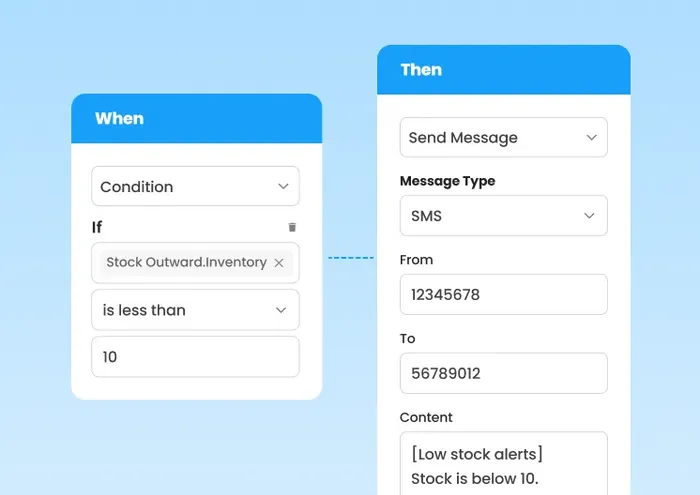
Similarly, you can set up automatic reordering when your stocks reach a certain level to prevent stocks from running out.
No-code ERP solutions like ours 一 Waveon helps build automatic workflows for reordering products and sending low-stock alerts to your phone. You can design custom workflows using conditional logic to make processes more streamlined.
💡 Explore More Customer Stories
5. More Focus on Security and Compliance
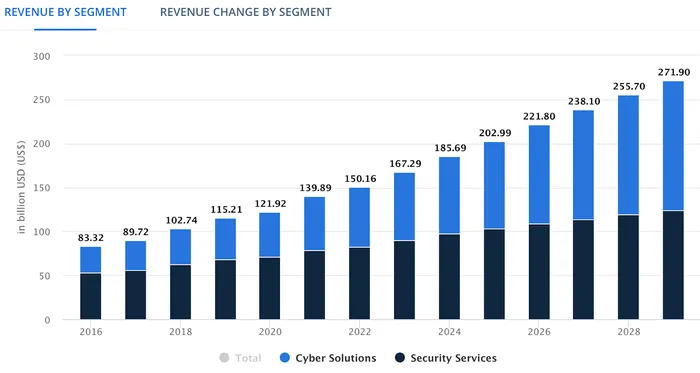
As ERP systems become more connected and accessible, the need for better security has also risen. ERP providers are investing more in security measures and ensuring compliance with regulations.
The consistent growth of the global cybersecurity market is a testament to the rising importance of cybersecurity.
Here are some ways in which modern ERP systems are improving security measures:
Modern ERP systems use AI-powered threat detection to monitor user behavior and flag suspicious activity.
Instead of automatically trusting users inside the network, ERP systems now use strict identity verification at every step.
Cloud ERP providers regularly update encryption standards and implement security patches to keep your system secure.
Modern ERP systems have built-in compliance tracking for regulations like GDPR, HIPAA, and SOX.
6. A Strong Shift Toward No-Code Development
The global market size for no-code development platforms was $28.11 billion in 2024 and is set to reach $93.92 billion by 2029. This significant growth indicates a strong shift from traditional ERP systems to no-code platforms.
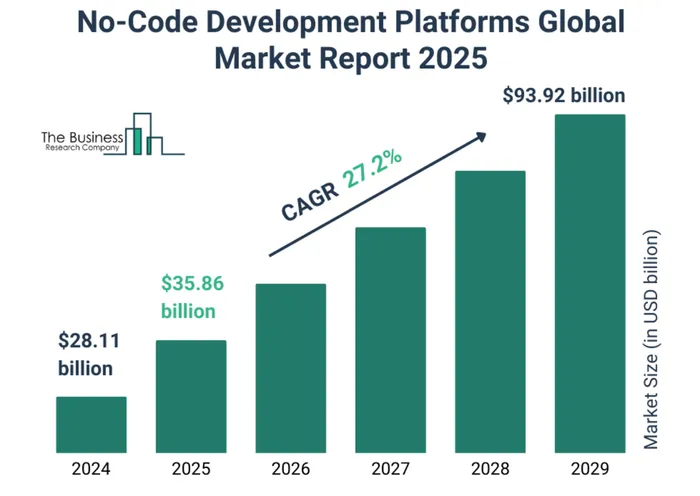
The reason behind more and more companies opting for no-code development is that it allows you to modify your ERP systems and add more functionality without hassle. It is cheaper, quicker to implement, and offers more flexibility.
Waveon is also a no-code ERP development platform that allows you to quickly develop and implement an ERP solution tailored to your business needs. It offers drag-and-drop tools, pre-built templates, and visual workflows to make the development process faster.
Take our order management template, for instance, which solves complex challenges like unlimited product registration and simple option/variant configuration.
For businesses that need ordering and inventory without the overhead of a full ERP, StackCube offers a modular starting point built for distributors.
7. The Rising Popularity of Industry-Specific ERP Modules
Generic ERP systems no longer cut it, especially for businesses in specialized industries like aerospace or pharmaceuticals. These industries require specialized solutions with industry-specific features.
This has led to a growing demand for industry-specific ERP systems, which offer pre-configured industry-specific modules.
Here’s how they benefit you:
Since they are pre-configured for your industry, deployment is quicker, and you spend less on custom development and IT support
Prebuilt compliance checks for industry standards (e.g., FDA for pharmaceuticals, GAAP for finance) make things easier.
With industry-specific analytics, KPIs, and dashboards, you get better insights to make data-driven decisions.
Embrace the Top ERP Trends for Your Business Success
There you have it — embrace these most important ERP trends for 2025 and beyond to gain a competitive edge.
It helps you create a solution tailored to your needs quickly and cost-effectively. Try it out!
Learn more about No-code insights
Subscribe Waveon Newsletter
*Type your email address