Insight
Why Choose No-Code ERP Systems Over Excel

Waveon Team
3/10/2025
0 min read
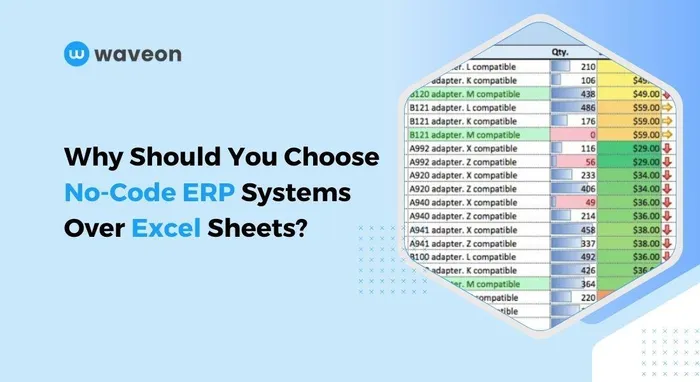
Excel sheets are a powerful tool for managing data, but they fall short when it comes to real-time data visibility, automation, and scalability. When handling vast amounts of data, managing bulky sheets becomes a hassle.
So, if you’re still using Excel for inventory or resource planning, it is time you upgrade to an advanced no-code ERP system.
Simplify processes by automating workflows, syncing data across departments and warehouses, and eliminating manual work. Instead of juggling with endless clunky spreadsheets, put a smart, connected system at work to save time and make informed decisions.
Let’s understand how no-code ERP systems are a much better alternative to Excel sheets in detail.
The Limitations of Excel and How to Overcome Them with a No-Code ERP System
Here, we’ll discuss the aspects where Excel falls short and how a no-code ERP system proves to be a better alternative to managing your inventory and resources.
1. Prone to Human Errors and Inaccuracies
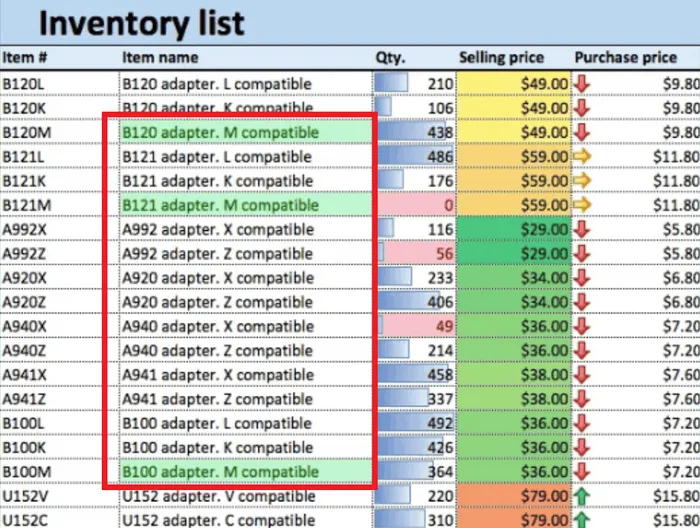
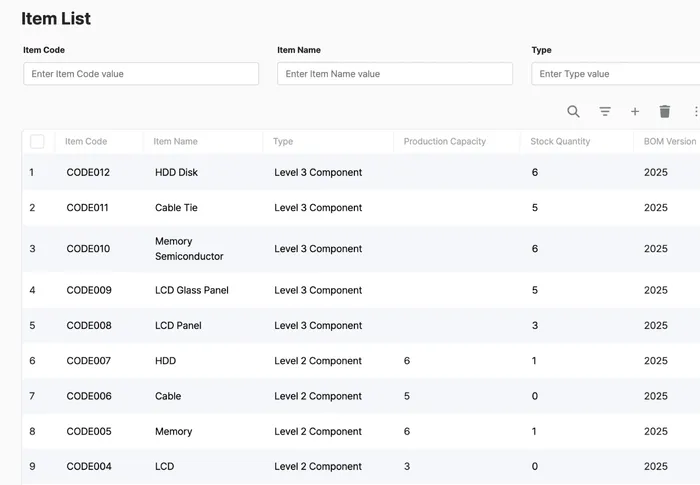
You must update data manually in Excel or Google Sheets, which involves the risk of human error such as typos or duplicate entries. Here’s an example of how manual entries can lead to errors in your inventory management:
✅Why Use a No-Code ERP System Instead
No-code ERP fetches data automatically across sources, reducing the chances of error. These systems automate data collection and management to ensure high data accuracy and integrity.
A good ERP system like Waveon can provide clean data, even when thousands of data points are involved.
2. Lack of Data Centralization
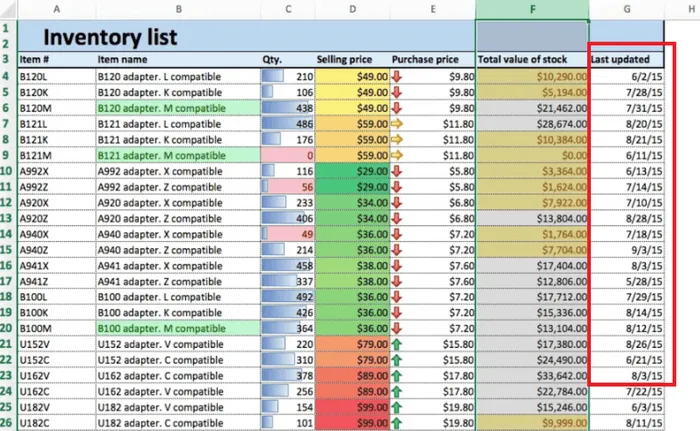
If you’re still using Excel or Google Sheets, it often leads to creating department silos where each team maintains a different sheet to manage their data. This slows decision-making as you need to collect each department’s data manually and compile it in an appropriate format to get the big picture.
You’ll also need to keep track of when you last updated the data for each stock.
✅Why Use a No-Code ERP System Instead
No-code ERP centralizes data from multiple sources in real time to provide you with a single source of truth. You can make prompt, data-backed decisions with real-time access to all important data from multiple sources.
3. No Real-Time Collaboration
Excel is great for offline work but doesn’t offer real-time collaboration options.
You can overcome this by using cloud-based Google Sheets, which allows collaboration among users with edit access. However, managing inventory or resources through Sheets has its own challenges, such as changes tracking and user accountability.
✅Why Use a No-Code ERP System Instead
No-code ERP allows teams to collaborate in real time while also tracking updates regularly.
It lets you give selective access to users based on their departments, roles, and authority. Your teams can collaborate freely while keeping your company’s data secure.

4. Low Scalability
Excel sheets are often the starting data management tool for every founder, startup, and small business. However, as your business grows, the amount of data you need to manage grows too.
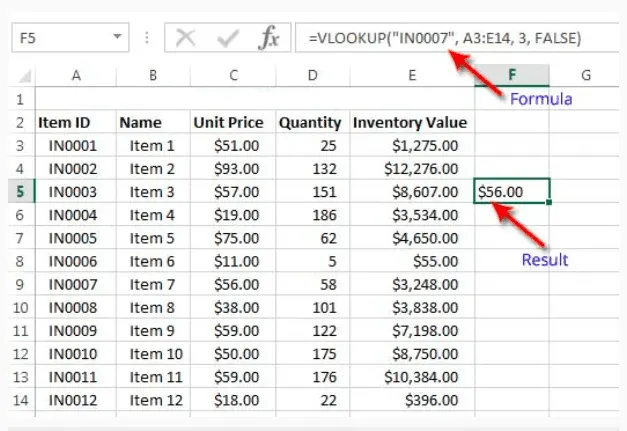
At some point, the data will be too much to handle in Excel regardless of how good you are with all complex Excel formulas.
✅Why Use a No-Code ERP System Instead
No-code ERPs scales with your business’ growth and are equipped to handle vast amounts of data more accurately and efficiently.
Other than handling a larger data volume, no-code ERP solutions also let you add more modules and functionality to cater to your evolving business needs. They support great customization flexibility and scalability.
For businesses that need ordering and inventory management without the overhead of a full ERP, StackCube offers a modular starting point that scales with you.
5. Lack of Integration with Other Systems
One of the biggest limitations of using Excel sheets is that these don’t integrate with other tools in your tech stack, which is not the case with no-code ERP tools.
✅Why Use a No-Code ERP System Instead
Most no-code ERP systems integrate with your existing tech stack, including CRM software, communication tools, marketing automation tools, and ecommerce platforms.
It is easier for you to create and automate workflows that leverage multiple tools to accomplish a complex task. This, of course, streamlines your operations and improves efficiency.
6. No Scope for Automation
Excel requires you to add every piece of information manually, including data updates and calculations. It lacks automation capabilities, which isn’t helpful for enterprise resource planning.
Yes, you can add formulas, but it still has limitations and is not exactly automated.
✅Why Use a No-Code ERP System Instead
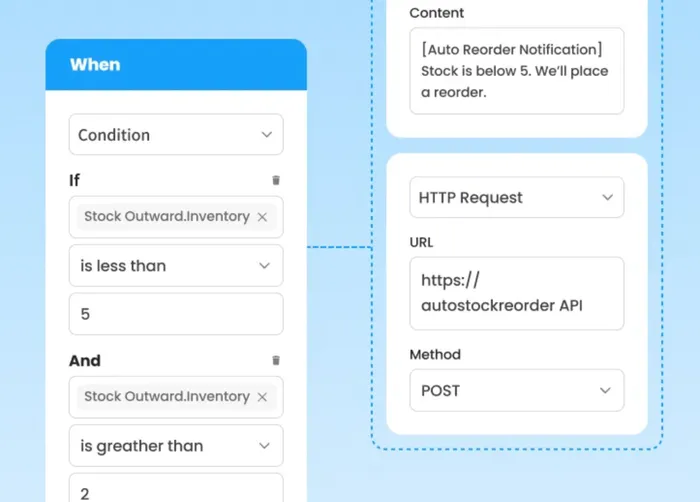
No-code ERP systems allow you to set automated workflows to get low-stock level alerts and automatically reorder stocks when your inventory drops to a specific number. This kind of automation is not achievable in Excel.
7. Lack of Robust Reporting Features
Excel lacks the analytics and reporting capabilities of a dedicated ERP system. You’ll need to create data charts yourself to gain actionable insights about your stock levels, purchase times, and customer demands.
Though Pivot tables offer some data visualization, creating them is exhausting and time intensive. And, there;s always a risk of human error.
✅Why Use a No-Code ERP System Instead
No-code ERPs let you create custom dashboards and generate reports to gain actionable insights from your data. You can easily analyze historical sales patterns, predict peak season demands, and optimize stock levels based on product popularity without needing complex coding skills.
The best part is that you can automate report generation and get periodic reports in your predefined format without any manual effort. It results in better inventory management and sales forecasting, thereby, accelerating your business growth.
Ready to Switch From Excel to No-Code ERP Systems?
While Excel is great for basic inventory tracking and a good option to start with, it can become messy as your business grows. Excel can’t handle vast amounts of complex business data that you need to deal with on a day-to-day basis.
A no-code ERP like Waveon makes your processes more efficient by:
Providing real-time visibility of your inventory and sales data across warehouses and stores
Automating low-stock alerts and stock reordering
Tracking purchases in real time
Eliminating human error inaccuracies
Predicting sales based on seasonal demands and product popularity
Boosting collaboration among production, engineering, sales, and customer support teams
And the best part? You can access these cloud-based ERP solutions anywhere without installation and view your data anytime. So, make the switch to no-code ERP solutions to get full control over your inventory and operations.
Learn more about No-code insights
Subscribe Waveon Newsletter
*Type your email address