Marketing
Landing page generator for ecommerce product launch campaigns: how to choose and use one

Waveon Team
12/13/2025
0 min read
If you run ecommerce product launches, a landing page generator for ecommerce product launch campaigns can save you from wrestling with your main site every time you announce something new. Instead of trying to bend your existing product page or homepage into a launch destination, a generator helps you spin up focused, testable pages quickly. This matters because most marketers still struggle with performance: nearly two out of three say their average landing page converts below 10% according to HubSpot’s State of Marketing report (source). With the right tool and a clear process, you can beat those averages and build launch pages that actually move inventory, grow your list, and set up your next campaign.
To make this practical, it helps to see how different types of tools line up. The table below gives you a quick reference for what you can expect from a typical landing page generator when you are planning ecommerce launches.
| Feature / Focus | Dedicated landing page builders (e.g., Unbounce) | Ecommerce-focused builders (e.g., Shopify apps) | Email-focused builders (e.g., MailerLite) |
|---|---|---|---|
| Primary use case | Standalone campaign pages and A/B tests | Product launch pages tightly integrated with store | List-building and campaign landing pages |
| Integration with ecommerce backend | Via integrations or scripts, not native catalog | Direct product, price, inventory, and checkout sync | Usually via embedded buy buttons or links |
| Template style | Very flexible layouts for many industries | Templates optimized for product media and purchase flows | Templates optimized for opt-ins and webinars |
| Built-in experimentation | Strong A/B testing and variant management | Varies by app, often basic or handled via third-party tools | Basic testing or none, focused on email metrics |
| Best fit launch scenarios | Paid traffic to focused offers and bundles | Store-driven launches and pre-orders | Waitlists, early access lists, and content-led launches |
You do not need to pick just one type permanently. Many teams use an ecommerce-focused builder for main product launches and an email-focused builder for waitlists, then layer in a dedicated landing page tool when they want deeper experimentation. The key is to understand what each category does well so you do not expect one tool to solve every problem. If you are still weighing your broader stack, it can also help to zoom out and compare an AI website builder vs. traditional website builders so you know where a landing page generator fits into your overall approach.

What a Landing Page Generator Does for Ecommerce Launches
When you launch a new product, sending traffic to your regular product detail page often seems good enough. In reality, a launch landing page plays a different role. A standard product page in an online store is built to sit inside your catalog: it assumes visitors will browse, compare variants, filter products, and add multiple items to their cart. A launch landing page, by contrast, is designed around a single focused action tied to one specific offer. That action might be pre-ordering, joining a waitlist, claiming a launch discount, or buying a particular bundle. Instead of navigation menus and cross-sells, it leans on storytelling, urgency, and social proof to guide visitors down one clear path.

This distinction matters because focused pages tend to convert better. Across industries, Unbounce’s conversion benchmark report shows median landing page conversion rates in the 4–12% range depending on niche, with top performers going significantly higher (source). Generic product pages often underperform because they try to serve too many purposes at once. For example, if you are launching a new skincare line, a dedicated landing page can walk visitors through the product story, ingredients, routine, and results, while a normal product page will mostly show images, variants, and a price.
Landing page generators like Unbounce or involve.me bundle several pieces you would otherwise have to stitch together yourself. Instead of designing in one tool, coding in another, and then bolting on analytics, these platforms let you choose a template, drag-and-drop sections, connect forms and payment widgets, and publish to your domain in one workflow. Many include built‑in A/B testing, heatmap integrations, and event tracking, so you can see exactly how many people hit your call to action, started a checkout, or completed a quiz. involve.me, for instance, focuses heavily on interactive experiences like quizzes or calculators, while Unbounce emphasizes flexible page layouts and testing.
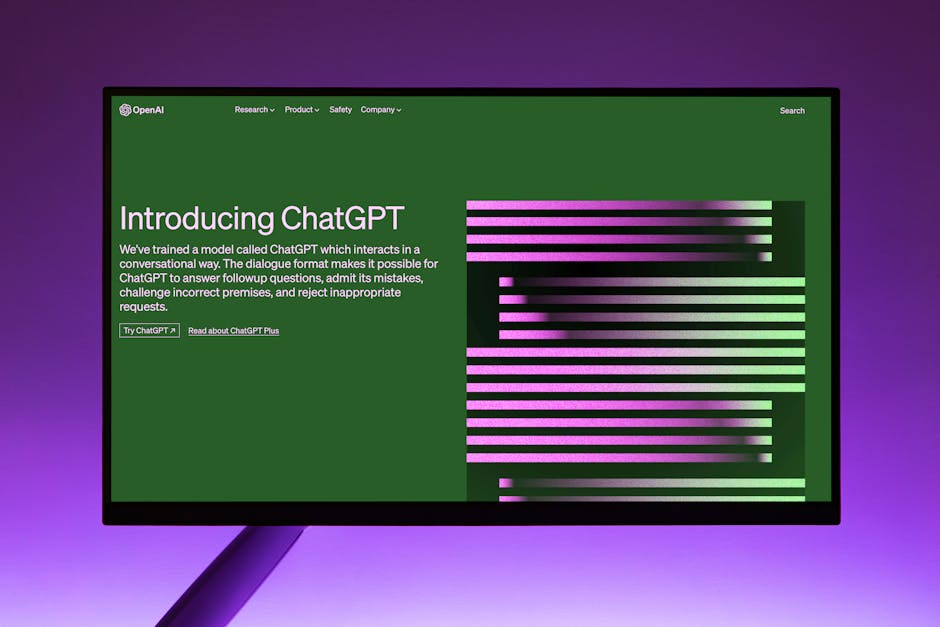
The key question is when a dedicated launch landing page makes more sense than sending visitors to your collection or homepage. If you are running paid campaigns for a single product or bundle, a launch landing page almost always wins because you can tightly match the messaging to the ad and remove distractions. If you are building a waitlist for an item that is not yet in stock, a landing page lets you explain what is coming, collect emails, and segment people by interest before you even have inventory. On the other hand, if you are promoting a seasonal sale across your whole catalog, or driving traffic from SEO keywords that span many product types, sending people to a well-designed collection or a promotional homepage banner can work just fine. As a rule of thumb, the more specific the campaign and the clearer the single action, the more a dedicated launch landing page will pay off.
A lot of teams worry that using a landing page generator will create a separate “mini site” that is hard to manage alongside the store. In practice, modern generators let you connect domains, subdomains, and tracking so your launch page feels like part of your brand and analytics stack, not a one-off. The main shift is in mindset: treat launch pages as campaign assets that can be cloned, tweaked, and reused, rather than one-time design projects that take weeks to ship. If you are pairing this with a broader no-code setup, it is worth thinking about how your launch pages relate to your no-code AI website builder or your main marketing site.
Using Templates and AI to Build Launch Pages Faster
If you have ever tried to design a launch page from a blank canvas, you know how quickly a simple idea can turn into a design rabbit hole. Templates and AI features are there to keep you out of that trap. A landing page generator for ecommerce product launch campaigns will usually come with a library of proven layouts, plus AI assistants that turn a short brief into a workable first draft. Your job shifts from “invent the whole page” to “choose a pattern and edit it”.
Tools like Figma Make’s AI landing page generator show where this is heading. You can feed it a short launch brief—your product name, main benefit, who it is for, and the primary goal—and it auto-builds a layout with a hero section, feature blocks, social proof, and pricing or signup sections. The AI suggestions will not be final copy or perfect design, but they give you a rough draft in minutes instead of hours. From there, you can drag sections up or down, swap images, and refine headlines while keeping a conversion-friendly structure.
For stores on Shopify, there are now builders such as Instant and Replo that tailor their templates to ecommerce best practices. Instead of generic “SaaS landing page” layouts, they offer product launch templates with above-the-fold product media, clear pricing and variant selectors, trust badges, and sticky add-to-cart buttons. Because they plug directly into Shopify, you can pull in product data, reviews, and inventory information without manual copying. Smart Insights data shows that average ecommerce conversion rates sit in the 2–3% range globally (source), so using templates built on proven ecommerce patterns is a straightforward way to push above that baseline.

Email-focused platforms like MailerLite also include landing page builders with prebuilt sections. This is especially useful when your launch strategy is list-first, such as building anticipation for a limited run or subscription box. You can start from a launch or webinar template, replace the content with your product story, and rely on the prebuilt hero, testimonial, and FAQ blocks to keep the page cohesive. Because these templates are designed around emails and campaigns, it becomes easier to match the look and tone of your launch emails and your launch page.
A good way to combine all of this is to use AI and templates for speed, then enforce brand consistency through careful customization. Replace generic stock images with your own product photography. Update colors, fonts, and buttons to match your store. Rewrite AI-generated copy so it uses your voice, not a generic tone. The goal is not to have the most original layout in the world but to have a launch page that feels like a natural extension of your brand while following the patterns that are known to convert. If you already use an AI landing page generator, you can often reuse your strongest sections across multiple product launch campaigns to stay consistent and move faster.
Designing Product Launch Pages That Convert
Once you have a generator and a template, the real work is in the structure and messaging. A landing page generator for ecommerce product launch campaigns can give you blocks, but only you can explain why someone should care enough to click “buy” or “join the waitlist” today. Thinking through your hero section, social proof, and flows up front will save you a lot of guesswork later.
Your hero section is where you win or lose attention. Visitors should be able to answer three questions within a few seconds: what is this, who is it for, and what do I do next? That usually means a clear value-focused headline, a short supporting line, strong product visuals, and a single primary call to action. For a physical product, this might be a high-quality lifestyle image or a short looping video showing the item in use. Avoid loading the hero with multiple competing buttons like “Learn more,” “Shop collection,” and “Subscribe” all at once. Pick one main action—pre-order, buy now, or join the list—and use secondary CTAs further down the page for people who need more information.
Social proof is your next big lever. People are naturally cautious about new products, especially if you are asking for pre-orders or higher price points. Platforms like Unbounce and ConvertFlow showcase examples where social proof is woven throughout the page: review snippets near the hero, a dedicated testimonials section with faces and names, and a “results” or “before and after” block further down. If this is your first product and you lack customer reviews, you can still show proof by highlighting press mentions, influencer quotes, or results from beta testers. Try to be specific: “Over 1,200 customers joined the waitlist in the first week” is more convincing than “Customers love it.”

Interactive flows can also help, especially when you are selling something that needs more explanation or personalization. involve.me is known for multi-step quizzes and forms that segment visitors or qualify leads without hurting conversions. Instead of a single long form, you can ask a few simple questions across multiple steps: what problem they are trying to solve, their preferences, and their budget range. This helps in two ways. First, completion rates tend to be higher when visitors are guided through small steps rather than staring at a long form. Second, you end up with richer data you can feed into your email sequences or ad audiences later.
It is important not to overdo complexity, though. Every extra step or question is friction. For straightforward launches—a new color of an existing product, for example—a simple page with a clear hero, a few benefits, social proof, and a purchase section is often enough. For higher-consideration items or subscription products, longer pages and multi-step flows can pay off because they give you room to educate and reassure.
A useful exercise is to scroll through your draft page and ask, “What is the one thing I want visitors to do on this screen?” If the answer is not obvious, simplify. That may mean cutting navigation links, trimming copy, or moving secondary elements like FAQs and detailed specs lower down so they do not compete with your main message.
Connecting Launch Pages to Your Store and Email Stack
A landing page generator for ecommerce product launch campaigns only works if it plugs into your existing systems. Otherwise you are stuck manually copying leads into your email tool or reconciling orders after the fact. The good news is that most serious builders now integrate well with major ecommerce platforms, email providers, and analytics tools, so you can treat your launch pages like an extension of your store.
If you are on Shopify, builders like Instant or Replo can sync pages directly with your product catalog. Instead of creating a fake product block on the page, you can drag in a “product” section that pulls the actual product, variants, price, and inventory from Shopify. When someone clicks “Add to cart” on the launch page, they are interacting with your real store backend, not a separate system. This means inventory stays accurate, discount codes still work, and your standard checkout flow and payment options apply. For a new product launch, this makes logistics much easier: you can manage stock, pre-order settings, and fulfillment rules in Shopify as usual, while the landing page focuses purely on storytelling and conversion.
On the email side, connecting tools like MailerLite, Klaviyo, or ConvertKit is essential if your launch involves a waitlist, VIP list, or segmented follow-up. Instead of dumping all signups into a generic “newsletter” list, you can tag them according to the specific launch page they came from, their quiz answers, or the offer they claimed. This lets you send tailored launch sequences: early access emails for VIPs, reminder emails for cart abandoners, and post-launch upsell campaigns. With basic automation, you can trigger a welcome series as soon as someone joins the waitlist, share behind-the-scenes content while they wait, and then send a timed launch announcement when the product goes live.

Analytics and CRM integration tie everything together. At a minimum you want to track page views, click-through to cart or checkout, form submissions, and completed purchases. Connecting Google Analytics, Meta Pixel, and your email tool’s tracking gives you visibility into how each traffic source performs. If you use a CRM, you can also push lead data from your landing pages into contact records, making it easy to see which campaigns generated high-value customers over time. This is where the “campaign asset” mindset becomes powerful: instead of viewing a launch page as a one-off, you can compare performance across launches, see which messaging patterns correlate with higher revenue per visitor, and reuse winning structures.
From a workflow perspective, it helps to standardize how you integrate. Use consistent naming for events and UTM parameters. Decide in advance where leads will go in your email tool and what tags they will get. That way, when you spin up the next launch page, you are not reinventing the connection process; you are just plugging into a familiar setup.
Testing, Measuring, and Iterating Launch Campaigns
Even a strong first draft will rarely be the best version of your launch page. The advantage of a landing page generator for ecommerce product launch campaigns is that testing and iteration become straightforward. Instead of redesigning your entire site, you can change one headline, hero image, or offer and see what happens.
Platforms like Unbounce or ConvertFlow include built-in A/B testing. You can duplicate your primary launch page, tweak a single element—say, the main headline or the CTA button text—and split traffic between the two variants. Over the course of a launch, you might test whether framing your product around a problem (“Stop wasting time on X”) beats a benefit-first headline (“Get Y done in 10 minutes”). You can also test different offers, such as a percentage discount versus a free bonus item, or a limited-time bundle versus a standalone product. The key is to avoid testing too many changes at once; when you edit copy, layout, and pricing in a single variant, it becomes impossible to know which factor drove results.

After your launch goes live, pick a small set of metrics to review regularly rather than drowning in dashboards. For most ecommerce launches, three numbers tell most of the story: click-through rate from page to cart or checkout, email sign-up or waitlist opt-in rate (if applicable), and revenue per visitor. If you see a strong click-through rate but low purchases, the issue may be in your checkout flow or pricing. If page views are high but clicks are low, your messaging or CTA likely needs work. Industry benchmarks suggest that even modest improvements can have outsized impact; for example, lifting a landing page conversion rate from 3% to 5% can translate into a 66% increase in orders from the same traffic volume.
Over time, the real value comes from feeding insights from one launch into the next. If you notice that a particular structure—such as starting with a bold problem statement, then quickly showing a short demo GIF—consistently outperforms other layouts, turn that into a reusable template inside your generator. If social proof above the fold reliably boosts conversions, bake that into your default sections. On the flip side, if a pattern regularly underperforms, such as hiding pricing until the bottom of the page, avoid repeating that mistake.
One practical way to systematize this is to keep a simple “playbook” document. After each launch, record what you tested, which version won, and what you learned about your audience. The next time you are under time pressure to spin up a launch page, you will not have to guess; you can start from the best-known pattern and adjust only what is truly new about the product or offer.
Practical Best Practices for Your Next Ecommerce Product Launch Page
As you plan your next campaign, it helps to translate all of this into a clear set of actions. A landing page generator for ecommerce product launch campaigns is only as useful as the process you wrap around it. Treat each launch as a mini project with a few non-negotiables, rather than an ad-hoc rush to “get something up”.
Before you build, it is worth running through a short pre-launch checklist. Thinking through these steps early will prevent a lot of last-minute fire drills.
- Confirm that you have final or near-final copy for your main headline, key benefits, pricing, and primary offer so you are not rewriting the page on launch day.
- Prepare product images and any videos in both desktop and mobile-friendly formats so the page loads quickly and looks clean on smaller screens.
- Install and test tracking pixels, analytics goals, and ecommerce events for key actions like add-to-cart, checkout start, purchase, and email signup.
- Test how the landing page renders on common mobile devices and browsers, paying close attention to font size, spacing, and tap targets for buttons.
- Verify that integrations with Shopify or your ecommerce platform, your email tool, and payment providers are connected and that a full test order flows through correctly.
By treating this checklist as part of your standard operating procedure, you reduce the risk that a technical glitch or missing asset will blunt the impact of a strong launch concept. Over time, you can adapt the checklist based on your own experience, but having a baseline will keep each new campaign more predictable.
It is also smart to prepare slight variants of your launch page for different traffic sources. Visitors coming from paid social ads, for example, may respond better to short, punchy messaging that closely mirrors the ad creative they just saw. Email subscribers, on the other hand, already know your brand, so the page they land on can skip some introductory content and go deeper into product details or comparisons. You do not need to build entirely separate pages; often duplicating your main page and adjusting the hero copy, headline, or social proof emphasis is enough to keep messages aligned with the channel.

After each launch, resist the urge to immediately archive everything and move on. Take an hour to document what worked and what did not. Did a certain section cause drop-offs on mobile? Did a particular testimonial attract more comments or replies? Were there support questions that kept popping up, indicating gaps in your page content? Capture these details in a shared document or within your project management tool, and connect them directly to the templates you use in your landing page generator. That way, every campaign improves your default setup instead of starting from zero.
When you look back after several launches, you will likely see clear patterns: a handful of page structures, offers, and messaging angles that reliably perform. Combined with a good landing page generator for ecommerce product launch campaigns, those patterns become a quiet competitive advantage. You can launch faster, test more confidently, and convert more of the traffic you are already paying for or working hard to attract—without reinventing your site every time you ship something new.
Bringing it all together: what to do before your next launch
If you skim back through everything here, a clear pattern emerges. A landing page generator for ecommerce product launch campaigns does three big jobs for you: it gives you focused pages that convert better than generic product listings, it speeds up production with templates and AI, and it plugs into your store and email stack so each launch becomes a repeatable system instead of a one-off scramble.
The tools matter, but your process matters more. When you start from a proven template, clarify a single goal for each page, and back it up with specific social proof, you make it much easier for visitors to say “yes” to your offer. When you wire your pages into Shopify or your ecommerce platform, your email provider, and your analytics, you get clean data and smooth operations instead of manual fixes. And when you test small changes and keep a simple launch playbook, each campaign gets a little sharper than the last.
If you are not sure where to begin, the most practical next step is small and concrete: pick one upcoming launch or even a minor product update and commit to running it through a dedicated launch page instead of sending traffic to your default product detail page. Use an AI-assisted or no-code builder to spin up a draft in an afternoon, plug it into your existing stack, and track just a few metrics: click-through to cart, opt-ins (if you have a list component), and revenue per visitor. After that launch, spend an hour reviewing what worked, adjust your template, and make that your new starting point.
From there, you can gradually layer on more sophistication: variants for different channels, simple A/B tests, and a tighter checklist for your team. If you are already using an AI website or landing page builder like Waveon, this is exactly the kind of repeatable, campaign-by-campaign workflow it is designed to support. The goal is not to build the perfect page on day one. The goal is to have a reliable way to get good launch pages live fast—and to make each one a little better than the last.
Learn more about No-code insights
Subscribe Waveon Newsletter
*Type your email address