Marketing
No-code website meaning for non technical founders explained in plain language

Waveon Team
12/15/2025
0 min read
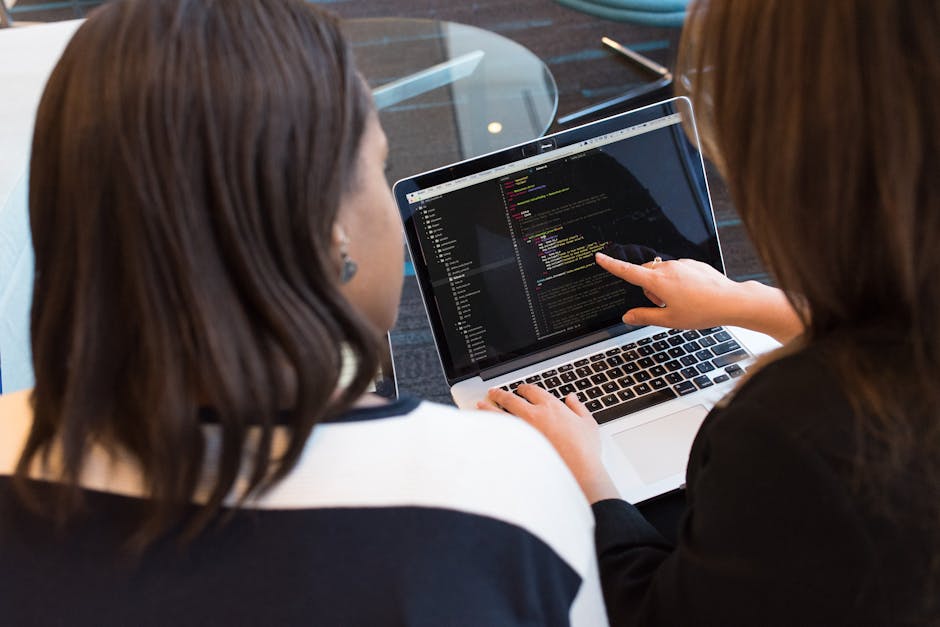
If you are a non-technical founder, the phrase “no-code website” can sound both exciting and confusing. You might hear that you can “build a site without developers,” but you are not totally sure what that really means, what the limits are, or where to start. This guide explains the no-code website meaning for non technical founders in plain language, using simple analogies and practical steps instead of jargon. You will see where no-code shines, where it struggles, and how to use it to get a real site live quickly. The goal is not to turn you into a “tool expert,” but to help you make smarter decisions, launch faster, and avoid expensive dead ends.
If you are also exploring how AI can speed up your site creation beyond basic drag-and-drop, you may find it useful later to compare this approach with an AI website builder and landing page generator that follows the same no-code principles but automates even more of the setup work.
What “no-code website” really means for non-technical founders
When people talk about a no-code website, they are talking about a site you can build and manage mostly through a visual, drag-and-drop interface instead of writing code. As a non-technical founder, that means you work with blocks, sections, and settings, not HTML, CSS, or JavaScript files. The tool handles the technical plumbing for you, so you can focus on structure, content, and basic design. This is the core of the no-code website meaning for non technical founders: you stay focused on the message and the offer, while the platform quietly takes care of the engineering details in the background.
A helpful way to see the difference is to compare a no-code website to a custom-coded site using a house-building analogy. If you hire developers to code your site from scratch, it is like hiring an architect and a construction crew to design and build a custom house. They can design any layout, pick any materials, and wire everything exactly the way you want, but it is slower, more expensive, and every change often requires the crew to come back and rebuild something. A no-code website is more like using high-quality modular housing or a condo in a well-designed building. The structure, plumbing, and wiring are already in place. You choose a floor plan (template), pick the finishes, arrange the furniture, and maybe knock down a non-load-bearing wall. You cannot move the entire building, but you can get something livable very quickly.
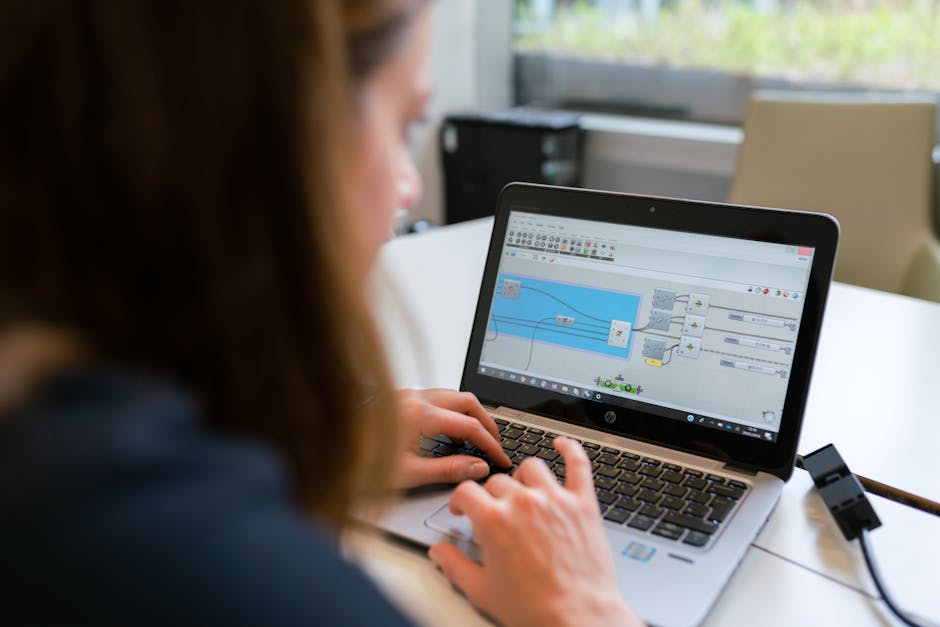
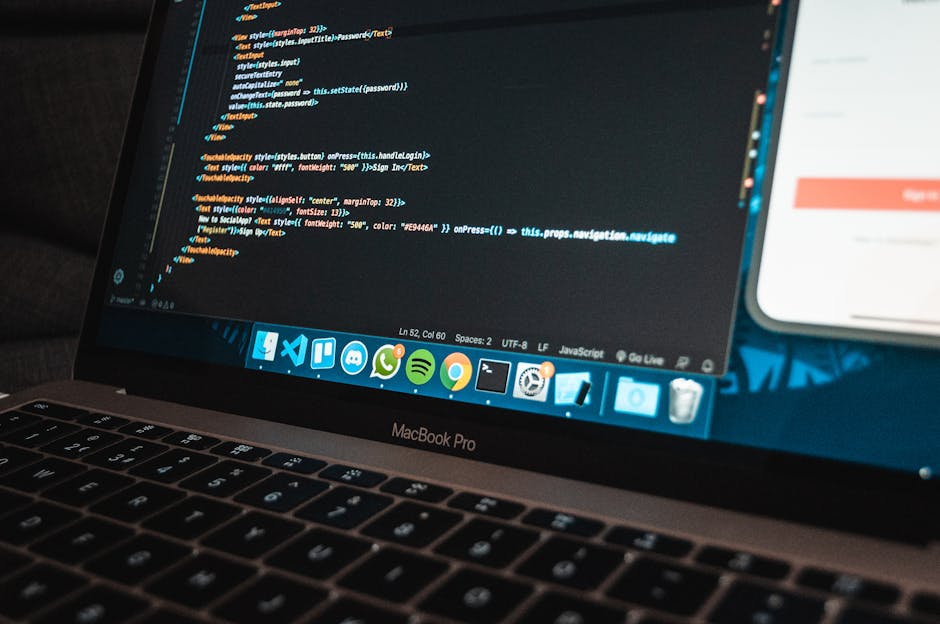
Inside a no-code website builder, the visual editor is where you “build.” Instead of writing <h1> or CSS flexbox rules, you drag a “Heading” block into a section, type your text, and choose font, size, and color from dropdowns. To add an image, you upload it and drag it to where it should display. Layouts are usually controlled by rows and columns: you can split a section into two columns, put text on the left, image on the right, and adjust spacing with sliders. Templates give you pre-built pages like “Home,” “About,” “Pricing,” or “Contact,” so you start from something that already looks professional. Many tools also offer components like contact forms, FAQs, hero sections, and pricing tables that you can drop in and customize instead of designing from a blank canvas.
This visual approach is what replaces writing code line by line. The code still exists—under the hood—but the platform generates and manages it for you. When you click “Publish,” the tool converts your configuration into real web pages that work on phones and desktops. According to an analysis from Adalo, by 2024 around 80% of non‑IT professionals building digital products will be using no-code or low-code tools in some way, showing how mainstream this visual approach has become (source).
It is also useful to understand where no-code websites sit in the broader spectrum of tools. At one end, you have pure no-code products, like many website builders and simple landing page tools. They are built so that everything important can be done through clicks and drag-and-drop. In the middle, you have low-code tools, which still give you visual building but let you add small bits of logic or scripts. You might visually design your pages but add a few lines of custom code for a special integration or behavior. At the far end, you have fully coded products, where developers build the interface, logic, and data layers with programming languages and frameworks.
As a non-technical founder, you do not need to pick a camp forever. Many teams start with a no-code website for speed, then move to low-code when they hit more complex needs, and eventually introduce fully coded components where it truly matters. The no-code website meaning for non technical founders is not “never use developers,” but “use tools that let you move without developers when you can, and collaborate with them when you must.”
Quick reference: no-code vs low-code vs full-code
To put these options side by side, it helps to see how they differ on a few practical dimensions that matter to you as a founder.
| Approach | Who it is best for | Typical use cases | Speed to first version | Flexibility for custom features | Who usually builds it |
|---|---|---|---|---|---|
| No-code | Non-technical founders and small teams | Marketing sites, simple landing pages, basic portals | Very fast | Limited to what the tool supports | Founder, marketer, designer |
| Low-code | Teams mixing business owners with a developer’s help | Interactive apps, custom flows, deeper integrations | Fast to moderate | Medium–high with some coding | Founder plus freelance/dev |
| Full-code | Startups with strong technical resources or later-stage | Complex products, heavy logic, unique UX | Slowest initially | Highest, limited only by budget | In-house or agency developers |
This comparison is not about which option is “better” in the abstract. It is about picking the level of speed and flexibility that matches where you are right now, knowing you can always move along the spectrum as your product and budget grow. If you later decide to expand from a simple site to more advanced funnels or experiments, you might also want to explore adjacent topics like how to build and test a landing page with an AI-based generator or how no-code fits into a broader growth stack.
Benefits and tradeoffs of building your site without code
If you are early-stage, the biggest advantage of a no-code website is speed. Instead of spending weeks briefing agencies, collecting quotes, and waiting for designs, you can get a working site in days or even hours. That speed matters because most early ideas need validation more than they need perfect design. You want to know, “Will people click? Will they sign up? Will they book a call?” A no-code website lets you put something real in front of people quickly so you can get those answers. This is where the no-code website meaning for non technical founders becomes tangible: it is the difference between having an idea in a slide deck and having a live URL you can share with customers and investors.
Cost is another major benefit. Hiring a professional agency to design and build a custom site can easily run into the thousands or tens of thousands of dollars. A typical website builder subscription might cost somewhere between the price of a streaming service and a phone bill per month. For a bootstrapped founder, that difference can be the gap between launching and staying stuck in planning. Market research from CodeConductor notes that small and medium-sized businesses are now the primary drivers of no-code adoption, as they seek cheaper, faster ways to get online without full development teams (source). The ability to test three landing page variations in a month for the same cost as a single design mockup from an agency is a huge strategic advantage.
Another benefit is direct control. With a no-code website, you can log in and change a headline before a pitch, update pricing after testing, or add a new testimonial immediately. You do not have to wait for a developer’s schedule or worry that a small change will trigger a new invoice. That responsiveness helps you iterate based on real-world feedback. Over time, this habit of frequent, small updates becomes a superpower, especially if you pair your no-code site with simple experiments like A/B tests or quick copy tweaks based on user interviews.
However, there are real tradeoffs you should be aware of. As your product or company grows, you may run into limits around performance, complex logic, and design flexibility. Many no-code website builders are optimized for typical marketing pages: home, features, pricing, blog, contact. They handle these very well, but if you want highly interactive behavior—like complex dashboards, live custom calculators, or unique web app interactions—you may find yourself fighting the tool. Pages with heavy custom animations or large dynamic datasets can begin to feel slow, especially on mobile or poor networks.
Design-wise, while most modern no-code tools offer plenty of customization, they still encourage you to work within their layout system. That is usually a good thing for non-designers, because it keeps the layout consistent and responsive. But if your brand requires a very unusual design, or you want pixel-perfect control like a design agency might deliver, the templates and components can feel like a constraint rather than a starting point.
Ownership is another area where non-technical founders should think carefully. When you use a no-code platform, you are building on someone else’s infrastructure. If they shut down, change pricing drastically, or remove a feature you rely on, you have limited recourse. Data export is especially important: can you easily export your content, forms data, and blog posts? Some platforms make it straightforward to move your data, while others are more closed. There is also the question of platform lock-in. If your site becomes tightly coupled with a builder’s specific features or proprietary components, moving later to another tool or a custom build can be more painful.
Finally, consider what happens if the tool has a serious outage. While this is true of any cloud service, it is worth asking: how transparent is their status page? Do they allow you to back up your content or export it periodically? As long as you go in with eyes open about these tradeoffs, the benefits of speed, cost, and control usually outweigh the risks for early-stage validation. The no-code website meaning for non technical founders is, in practice, “a fast and flexible starting point,” not “a locked-in forever decision.”
Types of no-code tools and what each is good for
When you start exploring this world, it can feel like there are a hundred tools all claiming to be “the best.” It helps to sort them into a few broad categories and match them to what you actually need as a founder. The main families you will encounter are website builders, app builders, and automation tools, with low-code options sitting between these and fully custom development. Having a basic map of these categories will make all the marketing claims you see much easier to filter.
Website builders are the most straightforward for non-technical founders who need a marketing site, landing pages, or a simple online presence. You use them when you want to explain what your product does, collect leads, publish blog posts, or direct people to book a call or buy something elsewhere. If you are launching a new SaaS, coaching service, or e‑commerce experiment, a website builder is usually where you start. You get templates for typical pages, basic SEO settings, custom domains, and sometimes built-in forms or email capture.
App builders are more suitable when you want your product itself to be interactive and web-based. Think user logins, dashboards, multi-step workflows, or simple marketplaces. As a non-technical founder, if your idea is closer to “a tool users will log into” than “a brochure that explains what we do,” then app builders, sometimes called no-code platforms or visual app builders, will be more relevant. They let you model data (users, projects, tasks), create interfaces around that data, and define logic like “when a user clicks this button, create a record and send an email.”
Automation tools sit alongside these. They do not create the website; they connect services together so your workflows run automatically. For example, when someone fills out a form on your no-code website, an automation tool can add them to your CRM, send a welcome email, and notify your Slack channel. For a non-technical founder, this is how you glue together different no-code pieces without learning APIs. These tools become more important as you start to chain multiple services into a coherent process.
Low-code tools build on these categories by letting you go a bit deeper when needed. They still have visual editors, templates, and drag-and-drop components, but they also expose areas where you can add custom logic, conditions, or code snippets. Maybe you want a specific pricing calculator that your website builder cannot do out of the box, or you need to integrate with a niche third-party API. Instead of giving up or fully rewriting your product, a low-code platform might let a freelance developer help you in targeted ways while you still own most of the building process.
When comparing tools, keep your criteria simple and practical rather than getting lost in feature checklists. First, consider learning curve: how fast can you go from zero to a basic live page? Look for tools with clear onboarding, plenty of starter templates, and good documentation. Second, pay attention to the quality and relevance of templates. As a founder, you will save a lot of time if the tool has templates close to your use case, like “SaaS landing page,” “personal consultant site,” or “pre‑launch waitlist.” You can see what this looks like in practice in many modern AI-assisted website builders for small businesses, which bundle relevant layouts and copy blocks for typical startup scenarios.
Integrations matter as your stack grows. Even if your first version is simple, check whether the tool connects smoothly with your email provider, analytics, or payment processor. Finally, evaluate support and community. When you get stuck, you want responsive support, active forums, or good tutorials. This is especially important if you are the only non-technical person on your team and do not have an in-house developer to lean on.
How non-technical founders can start a no-code website step by step
It is tempting to start by signing up for a bunch of tools, clicking around, and hoping a website emerges. That usually leads to overwhelm and half-finished pages. A more effective approach is to start with clarity on what you are trying to achieve, then choose a tool and move through a simple sequence. Thinking in steps does not mean becoming a project manager; it just keeps you from jumping straight into design decisions before you know what the site is supposed to do.
Before you open any builder, define the basics: the problem you solve, who you solve it for, and the one key action you want visitors to take. For example, if you are launching a B2B SaaS, your key action might be “book a demo.” If you are a consultant, it might be “schedule a free discovery call.” For an early consumer app, maybe it is “join the waitlist.” When you know that primary action, it will guide how you structure your homepage and call-to-action buttons. It also keeps you from cluttering your site with every possible feature and message.

Once your goal is clear, pick a website builder that matches your needs and comfort level. If you have never built anything before, choose the tool that feels easiest and has a template that looks close to what you want, rather than the one with the longest feature list. At this stage, perfection matters far less than momentum. If you want to speed this up even more, you can look at tools that generate a first draft of your landing page content and layout using AI so you are editing instead of starting from a blank screen.
After signing up, start by choosing a template designed for your type of business. If your goal is a simple marketing site, a “startup landing page” or “service business” template will usually give you a hero section, benefits, social proof, and a contact or signup area. Do not worry if the colors or fonts are not right yet; first, focus on the structure. Replace the placeholder text with your own words, section by section. Use your customers’ language, not buzzwords. A simple test: if a stranger read your hero section for five seconds, would they understand who it is for and what you help them do?
Next, customize the visual basics: logo, colors, and fonts. Many no-code builders let you define a “global” style so that when you change your brand color once, it updates across the site. As a non-technical founder, lean on the defaults when in doubt. Most tools ship with reasonable typography and spacing. Slightly adjusting a few brand elements is enough to make the site feel like yours without getting lost in design details.
Then, connect your domain and set up basic analytics. Buying a custom domain (like yourstartup.com) immediately makes you look more credible. Research shows that a significant number of small businesses still either do not have a website or rely only on social media; for example, a 2023 survey cited by Wix found that over a quarter—27%—of small businesses without a website believed they were not relevant to their business (source). As a founder, simply having a real domain and site already puts you ahead of many peers. For analytics, tools like Google Analytics or built-in stats in your website builder will give you basic numbers like page views and conversion rates. Set them up from day one, even if traffic is low, so you have a baseline when you start experimenting.
With your site live, adopt an iterative mindset. Do not wait until everything is perfect before sharing the link. Instead, launch a simple version, send it to a small group of target customers or peers, and ask very specific questions: “Is it clear what this product does?” “Would you be willing to sign up based on this information?” “What is missing that you’d want to see?” Use their feedback to make small, frequent improvements instead of giant redesigns. This approach aligns closely with how non-technical founders are increasingly building: test, learn, refine.
Practical launch checklist for your first no-code website
To keep the process manageable, it helps to frame it as a short checklist you can work through over a few focused sessions.
- Define your audience, the problem you solve, and the single primary action you want visitors to take on your site.
- Choose a no-code website builder that feels simple and has templates close to your use case.
- Select a template and replace all placeholder text and images with clear, customer-focused content.
- Apply your basic branding by adding your logo, choosing one or two brand colors, and setting simple, readable fonts.
- Connect your custom domain so visitors see a professional URL instead of a default subdomain.
- Turn on analytics and basic SEO settings so you can track traffic and help search engines understand your site.
- Share the site with a small group of target users, collect feedback, and make one or two meaningful improvements.
If you can confidently say you have completed these seven steps, you are already far beyond “thinking about a website” and into the territory of learning from real visitors, which is where real startup progress happens.
When no-code is not enough and how to work with developers
No-code tools are powerful, but they are not magic. At some point, you might notice you are bending the platform into shapes it was never meant to handle. Recognizing those moments early helps you avoid frustration and make smarter decisions about when to bring in developers or move to a hybrid setup. The key is not to see this as “failing” at no-code, but as a natural step as your product matures.
Common warning signs include complex workflows that require many chained workarounds, performance issues as your site grows, and integrations that feel fragile. For example, if you find yourself stacking multiple automation rules just to handle a basic signup flow, or relying on convoluted conditional logic to mimic a simple app, the no-code approach may be stretched too far. If pages start loading slowly because you have bolted on many third-party scripts and the builder struggles to handle them, that is another red flag. Likewise, if you need to integrate with a niche system that your builder does not support and there is no straightforward API connection or plugin, you may hit a hard limit.
When you reach those limits, the work you have already done in no-code is not wasted. You can use your no-code website as a visual prototype and briefing tool for developers. Instead of writing a long specification document, you can say, “Here is how the homepage is structured. Here is the signup flow. Here is what users see after they log in.” Developers can click through, understand your intent, and then design a more robust architecture that preserves the proven parts while improving scalability and flexibility. This usually makes the custom build faster and more focused, because you already tested messaging, layouts, and flows with real users.
Hybrid setups are also increasingly common. In a hybrid model, you might keep your marketing site and landing pages on a no-code builder, where your team can iterate quickly, while connecting to custom back-end services for advanced features. For example, your homepage and pricing page might live entirely in a no-code site, but when a user logs in, they are taken to a custom app hosted elsewhere. Or the no-code site could call custom APIs for things like real-time pricing, search, or recommendation features. This gives you the best of both worlds: speed and autonomy on the marketing side, and the flexibility of code where your core product logic lives.
As you grow, your role as a non-technical founder shifts from “builder” to “product owner.” You may still make small copy updates or launch new landing pages in your no-code site, but you also work closely with developers to plan when and how to graduate parts of your product to more scalable solutions. There is no single right moment to do this, but typically you will feel it when you are spending more time wrestling with the tool than talking to customers or when performance issues start impacting user experience.
Mindset and examples of successful non-technical founders
Understanding the no-code website meaning for non technical founders is as much about mindset as it is about tools. The founders who use no-code most effectively are not the ones who learn every trick in a builder; they are the ones who stay close to the market, run frequent experiments, and see tools as a way to test ideas, not as an end in themselves. Strong market understanding and a clear product vision matter more than your technical skills, especially in the earliest stages.

There are many examples of non-technical founders launching real businesses using no-code. One well-known story from the no-code community involves a founder named Chad, who built and scaled a startup using no-code tools to millions in revenue before exiting. In a case study on NoCodeExits, his journey is described as starting with simple, no-code-built products that validated demand and generated meaningful income, proving that you can reach serious milestones before hiring large development teams (source). Stories like this are increasingly common: founders test a niche product or service using a no-code website, acquire paying customers, and only later bring in engineers to extend or harden the platform.
Patterns emerge when you look at how these founders work. They often start with a very narrow target audience and problem. They launch a basic site or app using no-code, sometimes in just a few days. They use landing pages and forms to capture interest, often before the full product exists, and then manually deliver value behind the scenes. This lets them validate whether people are willing to pay without over-investing in technology. As they see traction, they improve the no-code setup—better messaging, clearer pricing, cleaner onboarding—and only later decide whether a custom build is justified.
A learning mindset is central to this approach. Instead of thinking, “I need the perfect site,” think, “I need a good enough site to run the next experiment.” You can, for example, test two different headlines over a week and see which gets more demo requests. You can add a short survey after signup and learn why people are interested. You can adjust your navigation based on which sections people actually click. Because no-code sites are fast to change, they are ideal for this kind of iterative, data-informed learning.
Industry statistics reinforce that you are not alone on this path. Various market reports suggest that SMBs are leading the charge in low-code and no-code adoption. CodeConductor’s roundup notes that small and medium-sized businesses are expected to drive a large share of no-code usage in digital transformation projects (source). Another survey summarized by Adalo highlights that around 45% of users of no-code platforms are entrepreneurs and small business owners, not professional developers (source). In other words, your situation as a non-technical founder building with no-code is fast becoming the norm, not the exception.
As you move forward, treat each step—choosing a builder, launching a first version, running your first test—as a skill you can improve. The more you work with these tools, the more comfortable you will be making changes, reading basic analytics, and planning simple experiments. Over time, you will not just understand the no-code website meaning for non technical founders in theory; you will have your own live examples that brought in customers, feedback, and revenue.
Bringing it all together
A no-code website, in plain terms, is a way for you as a non-technical founder to get a real, working web presence without writing code. Instead of hiring a full development team just to explain your idea to the world, you use visual editors, templates, and drag-and-drop components to assemble pages that look professional enough to test your message and your market. Compared to a fully custom build, it is like moving into a well-designed modular home instead of constructing a house from bare land—less freedom on the deep structure, but much faster and cheaper to get started. For anyone trying to grasp the no-code website meaning for non technical founders, this tradeoff between speed and deep customization is the central idea.

There are tradeoffs around complexity, performance, and long-term ownership, and it is important to be honest about those. But for early-stage validation, the benefits of speed, cost savings, and direct control are hard to beat. With a clear goal, a sensible choice of tool, and an iterative mindset, you can launch something meaningful in days, not months. Later, if your needs outgrow your no-code setup, you can use it as a concrete prototype to guide developers or move into a hybrid architecture that keeps your marketing no-code and your core product custom.
Most importantly, remember that building online is no longer just for people who write code. The statistics, case studies, and everyday examples show that non-technical founders are already using no-code to build real businesses, raise funds, and lead product vision. If you focus on understanding your customers, testing your ideas, and learning from each iteration, you will be using the true power behind the no-code website meaning for non technical founders: the ability to move quickly from idea to something real that people can see, click, and respond to.
Conclusion: simple next steps you can take this week
If you have read this far, you already know enough to stop researching and start building. You do not need to master every no-code platform or predict your entire tech stack for the next five years. You just need a clear goal for your site and the willingness to ship an imperfect first version.
A practical way forward is to set aside one or two focused sessions this week and work through the basics. In the first session, decide who your site is for, what problem you are promising to solve, and the single main action you want visitors to take. In the second, pick a no-code builder that feels approachable, choose a template that is “good enough,” and replace the placeholder text with simple, concrete language your customers would actually use. If it helps, you can lean on an AI-powered builder to generate a draft structure and copy, then edit it so it sounds like you.
Once that first version is live on a real domain, resist the urge to polish it endlessly in private. Share the link with a handful of potential customers, peers, or advisors, and ask them what is confusing, what is compelling, and what would make them more likely to take the action you want. Use their answers to make small, specific improvements: a clearer headline, a stronger call-to-action button, an extra FAQ that addresses a common objection. Then repeat that loop. Each cycle turns your no-code website from a static brochure into a learning tool that shapes your product.
If you keep your expectations realistic—no-code for speed and learning now, custom work later when it is justified—these tools can take you a long way. Your next real milestone is not “the perfect website,” it is a simple, working site that helps you talk to the right people and move your idea forward. Start there, iterate often, and let your results, not the tool catalog, guide what you need to do next.
Learn more about No-code insights
Subscribe Waveon Newsletter
*Type your email address