Marketing
How to Use an AI Website Builder to Improve Conversion Rates on Your Site

Waveon Team
12/6/2025
0 min read

If you are trying to figure out how to use an AI website builder to improve conversion rates, you are not alone. Across industries, the average website conversion rate often sits somewhere between 2–5%, according to benchmark data compiled by Invesp for 2024 (source). That means most visitors leave without buying, booking, or signing up. AI builders promise faster, smarter optimization without needing a full design or development team. The real question is how to use them in a way that actually moves your numbers.
In this guide, you will learn how an AI website builder can support real conversion rate optimization, not just create pretty layouts. We will walk through setting up AI‑driven landing pages, running A/B tests, layering in personalization, reading AI insights, and turning all of this into a simple workflow you can manage each week. If you are still deciding which tool to use, you may also want to compare this approach with a broader AI website builder & landing page generator so you understand what features are available.

What an AI Website Builder Can Do for Your Conversion Rates
When you build pages manually, most of the work falls on you or your team. You choose the layout, write all the copy, decide where to place the call to action, and try to guess which design will convert best. Then, when something is not working, you repeat the process from scratch. That traditional approach is slow and tends to rely on opinion rather than data.
Learning how to use an AI website builder to improve conversion rates starts with understanding how it changes that process. Instead of starting from a blank canvas, you describe your goal, audience, and offer, and the AI suggests layouts, sections, and content patterns that have worked well for similar goals. You still control everything, but you are no longer guessing at the basics every time.

A strong AI builder can assist with layout decisions by proposing page structures that match your goal: lead generation, product sales, webinar signups, or demo requests. Instead of you manually deciding where to put testimonials or FAQs, the builder can create a version that follows proven conversion patterns for your goal type, which you then fine‑tune. Many tools also offer AI copy suggestions right in the editor. You can highlight a weak headline or section and ask the AI to rewrite it to be clearer, more benefit‑focused, or more concise, and then choose the variation that best fits your brand.
Another big difference from traditional tools is built‑in on‑page optimization features. Some AI builders automatically check for missing trust elements such as social proof or guarantees, weak calls to action, or unclear sections. They can flag, for instance, that your primary button appears too far below the fold, or that your main headline does not clearly explain your value. Instead of relying entirely on your own checklist, you get a real‑time “conversion assistant” as you build.
Under the hood, an AI website builder typically includes common conversion optimization features like smart recommendations, automated experiments, and predictive scoring. Smart recommendations surface data‑backed suggestions: adding social proof above a form, shortening your form fields, or making your headline more specific. Automated experiments can generate alternative versions of headlines, hero sections, or button text and then test them without needing a designer to rebuild each one. Some platforms even offer predictive scoring, where the AI estimates which variation is most likely to perform best based on historical patterns and early traffic signals, before the test is fully complete.
These features matter because they help you move faster. A/B testing alone can create impressive gains. Hostinger’s 2025 landing page statistics roundup notes that continuous A/B testing can improve conversion rates by 20–30% over time for many businesses (source). AI builders make it practical to run those tests week after week without heavy manual setup. If you want a deeper overview of how this fits into broader landing page strategy, you can pair this with a guide on how to create high-converting landing pages.
It is also important to see AI builders as one piece of a broader conversion strategy. Your conversion rate depends heavily on traffic quality and the strength of your offer. If you are sending untargeted traffic to a weak offer, no builder will magically fix that. The most effective approach combines three layers: targeted traffic from channels where your audience already is, compelling offers that solve clear problems, and pages that communicate those offers clearly and persuasively. The AI website builder mostly helps with this third layer—but by making that piece much more efficient, it frees you up to improve traffic and offers as well.
To make the role of an AI website builder in conversion optimization easier to see at a glance, it helps to compare what changes when you shift from traditional tools to an AI‑assisted workflow.
| Area | Traditional website builder | AI website builder focused on CRO |
|---|---|---|
| Page creation speed | Pages are created manually and can take days or weeks per iteration. | Draft pages and variants can be generated in minutes from a simple brief. |
| Copywriting support | All headlines, body copy, and CTAs are written from scratch by your team. | The tool suggests and rewrites copy based on goals, tone, and performance. |
| Conversion best practices | You rely on personal experience or scattered checklists to guide decisions. | Built-in patterns and prompts nudge you toward proven conversion structures. |
| Experiment setup | A/B tests require separate tools, dev help, and manual traffic splitting. | Variants, traffic allocation, and tracking are handled directly in the builder. |
| Insight generation | You manually interpret analytics and guess what to try next. | The platform surfaces issues and ideas from behavioral data and test results. |
This kind of comparison highlights why an AI website builder is particularly useful if you have limited design or development resources and want to run more tests than your current team can comfortably handle.
Setting Up AI-Driven Landing Pages and Funnels
Most people first explore how to use an AI website builder to improve conversion rates on a single landing page. This is a smart starting point because you can clearly measure before‑and‑after performance. Many businesses begin with a key page like a lead magnet signup, a core product page, or a “book a demo” form.
Start by defining a single conversion goal for the page. This should be something specific like “newsletter signups,” “trial starts,” “product purchases,” or “consultation bookings,” not vague goals like “engagement.” In the builder, you usually enter this goal along with a short description of your audience and what you are offering. The AI then suggests a page layout that naturally supports that goal. For a free trial, for example, it may emphasize a strong hero section, social proof, a short feature overview, and a simple signup form above the fold. You can accept the proposed layout and then adjust sections to match your brand and content.
Next, lean on the AI copy tools, but do not treat them as a one‑click solution. A good workflow is to first draft your own rough messaging: who the page is for, what problem it solves, and the main benefit of your offer. Then ask the AI to generate headline ideas that highlight those benefits. You might prompt it with something like, “Write five headlines emphasizing how we save small marketing teams 10 hours per week on web updates,” and sort through the options. Do the same for body copy, focusing on clarity over cleverness. Finally, use AI to try several versions of your button text, keeping it action‑oriented and specific—“Start free trial,” “Get my quote,” or “Book my 30‑minute consult” rather than “Submit.”
A practical example of this approach is a mid‑size B2B SaaS company rebuilding its demo request page. Initially, the page had a generic headline and several paragraphs about the company’s history. Using an AI website builder, the team set “Demo requests” as the primary goal, allowed the tool to restructure the page around that goal, and used AI copy suggestions to tighten the messaging. They added specific, outcome‑focused headings like “See how you can cut reporting time in half” and simplified the form from seven fields to four based on AI recommendations. After launching, the company saw demo requests increase from roughly 2.3% to 3.6% of visitors over six weeks, a gain of more than 50%, simply by aligning layout and copy to a clear goal and letting the AI guide structural decisions.
Once the individual page is in good shape, connect it into a simple funnel. An AI website builder typically makes it easy to add a thank‑you page after a form, a checkout step after a product page, or a follow‑up content page after a lead magnet signup. Your aim is to create a smooth journey from first click to conversion. For example, clicking an ad might lead to the landing page, which leads to a short form, then to a thank‑you page with next steps and perhaps an introductory offer. The fewer unnecessary steps and distractions in this path, the better.
As you connect forms, checkout pages, and follow‑up steps, check that your tracking is set correctly. The builder should let you specify which action counts as a conversion for reporting. Make sure forms are tied to your email or CRM system, checkout pages are correctly linked to payment processors, and thank‑you pages are configured as goals in your analytics. A smooth technical setup ensures that when you start optimizing, you are working with clean, reliable data.
To turn this into something you can follow without overthinking it, you can treat the initial setup as a short step‑by‑step checklist you revisit each time you launch a new AI‑assisted landing page.
- Define one primary conversion goal for the page and write it down in your own words.
- Enter your goal, audience description, and offer details into the AI website builder’s setup flow.
- Review the suggested layout and keep only the sections that clearly support your goal.
- Draft simple, rough messaging for the hero, benefits, and CTA before generating AI copy variants.
- Use AI to rewrite and refine headlines, body copy, and button text, keeping clarity as the main filter.
- Connect the page to a thank‑you or next‑step page and ensure forms or checkout elements are working.
- Set up conversion tracking inside the builder and in your analytics tool to record your defined goal.
Once you have run through this process a couple of times, it becomes a routine you can apply to future campaigns without needing to reinvent the wheel. As you build more funnels, it can also help to look at adjacent topics like no-code landing page creation so you can keep everything manageable without writing custom code.
Using AI for A/B Testing and Continuous Page Improvements
Once your first AI‑assisted landing page is live, the real gains come from ongoing A/B testing and iteration. This is where an AI website builder moves from “helpful design tool” to “continuous improvement engine” that steadily lifts your conversion rates over time.
Rather than manually designing every test variation in a separate tool, you can use the AI to generate variants directly in the builder. You might start by testing different headlines, hero images, or page structures. For example, you could keep the same core content but ask the AI to create one variation where social proof appears above the fold, and another where it sits just before the pricing section. Similarly, you might test a short versus long version of your page, with the AI handling most of the rewriting work.
Modern AI builders can also handle the logistics of testing. They allocate traffic between your variants—commonly 50/50 at the start—and track conversions for each version. Some platforms highlight the “winning” version once there is enough statistical confidence that the difference is not random noise. According to testing resources like Optimizely, properly run A/B tests remain one of the most reliable ways to lift conversions over time (source). AI does not replace the need for good test ideas, but it does drastically reduce the effort required to set them up and read basic results.
A good rhythm is to always have at least one test running on your highest‑impact page. Start with big, obvious elements: your main headline, hero image, and primary call to action. Then move into secondary elements like testimonials, guarantees, pricing presentation, and FAQs. Each time a test concludes, you adopt the winner as the new control, then create a new variant to challenge it. Over a few months, even modest gains from each test—2% here, 5% there—compound into meaningful improvements.

To keep everything organized, translate test results into a simple optimization backlog. At the end of each week or test cycle, write down what you tested, what you learned, and what you plan to try next. For example, if a shorter form outperformed a longer one, your backlog might include “Review all forms across the site and test a short version for each.” If a more specific, benefit‑led headline won, your next item might be “Rewrite product page headlines to focus on outcomes, then test variations.” Treat AI as your assistant for building and running those experiments, but keep a human in charge of strategy and priority.
Over time, this ongoing testing habit is what really shows you how to use an AI website builder to improve conversion rates in a compounding way. The individual changes might feel small week to week, but they accumulate into a site that is much better at turning visitors into customers or leads.
Adding Personalization and Self-Service Tools That Help Visitors Convert
Once your core pages and tests are in motion, the next step in learning how to use an AI website builder to improve conversion rates is personalization. Instead of showing the exact same page to every visitor, you can adjust content based on who they are and what they are doing. When done well, personalization can have a big impact. McKinsey has reported that companies excelling at personalization generate 40% more revenue from those activities than average players in their sectors (source).
Most AI builders allow you to set simple rules to show different messages or offers based on traffic source, device type, or behavior. For example, you might greet visitors from a specific ad campaign with a headline that echoes the ad’s promise, while organic visitors see more educational messaging. Mobile visitors may see a shorter page layout with streamlined forms, while desktop visitors get more visual details. You can also adapt calls to action based on behavior: someone who has visited a pricing page twice might see a “Book a quick pricing walkthrough” prompt, while a first‑time visitor sees “Watch the 3‑minute product overview.”
Beyond personalized messaging, AI can help you add self‑service tools that reduce friction. Many AI website builders now integrate guided product finders, interactive pricing explainers, or smart FAQ search. For an ecommerce store, a product finder might ask a few questions about budget, use case, and preferences, then suggest a small set of tailored products instead of making visitors browse dozens of categories. For a B2B service, an interactive pricing tool might let prospects enter team size and needs, then see a relevant pricing range. These experiences give visitors a sense of control and clarity, which usually leads to higher conversion.

AI chat or on‑page assistants can also support conversions when used thoughtfully. Instead of a generic chatbot that pops up to say “How can I help?”, you can configure the assistant with a focused set of buying questions: “What does implementation look like?”, “How does pricing work?”, “Is this right for my industry?”, and “How long until I see results?”. The AI can then answer from a curated knowledge base based on your site content, help center, and sales FAQs. This allows skeptical or detail‑oriented visitors to get answers immediately, without waiting for a human rep or filling out a contact form they are not ready for.
One real‑world example comes from a retailer that added a simple AI‑driven sizing and style guide to its product pages. Instead of expecting visitors to interpret static size charts, the tool asked a few questions about current clothing brands they wear and how they like their fit, then suggested a size. Combined with personalized recommendations based on browsing behavior, this change reduced returns and increased completed purchases, because shoppers felt more confident they were choosing correctly. While your business may be very different, the principle is the same: use AI to remove uncertainty and help visitors make better decisions faster.
Tracking the Right Metrics and Reading AI Insights
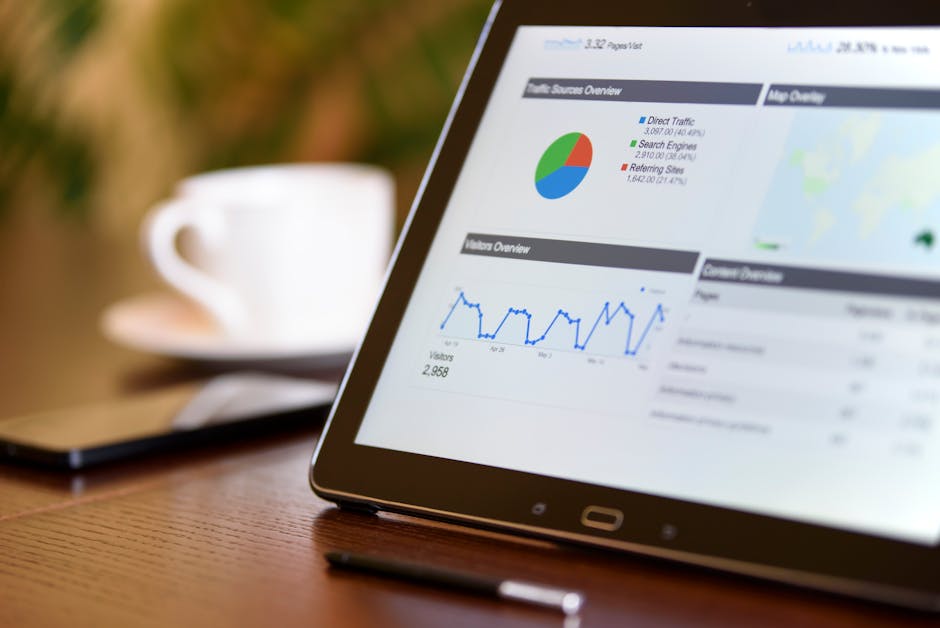
To know whether your AI‑driven changes are actually working, you need to track the right metrics. At a minimum, you should be watching conversion rate (the percentage of visitors completing your primary goal), bounce rate (the percentage leaving after viewing only one page), time on page or session duration, and funnel drop‑off (where people abandon the process). Many AI website builders integrate with analytics tools or provide their own dashboards where these numbers are tied to specific pages and experiments.
It helps to break these metrics down by step in your funnel. For example, you might see that your landing page converts 8% of visitors to form completions, but only 30% of those who see the thank‑you page click through to your follow‑up offer. Or you might notice that mobile visitors convert at half the rate of desktop visitors. When you see differences like this, you can create focused tests for the weak steps: a mobile‑specific layout, a clearer benefit on the thank‑you page, or better reassurance around security on a checkout step.
Comparing your results with industry averages can also give context. Invesp’s 2024 analysis shows that average website conversion rates vary widely, from around 2–3% in many ecommerce categories to 7% or more in high‑intent niches (source). B2B lead generation forms may convert anywhere from 1–10% depending on the offer and traffic quality (source). If you are far below your industry’s typical range, that is a signal that bigger changes—such as repositioning your offer or improving traffic targeting—may be needed alongside page‑level tweaks.
Most AI builders now go beyond raw numbers and offer insights like heatmaps, scroll maps, and automated suggestions. Heatmaps show where people click, tap, and hover, while scroll maps reveal how far down the page they typically read. If you see that only 20% of visitors reach your main CTA, your issue may be layout rather than copy. If many clicks land on non‑clickable elements, visitors may be confused about what to do next. Some tools also generate written insights such as “Visitors are not interacting with elements below this section” or “This form field has a high abandonment rate.”
When interpreting AI‑generated insights, use them as prompts, not rules. If the AI suggests moving testimonials higher on the page, consider why that might help: maybe visitors need social proof earlier to trust you. Then design a specific test—one version with testimonials near the top, another with them lower down—and let the data decide. Over time, you will build a clearer picture of what your audience responds to, and those learnings will be more valuable than any single suggestion. If you want to go further into analytics, it can be helpful to pair this with a focused guide on tracking and improving landing page performance.
A Simple Plan to Add AI CRO to Your Regular Workflow
The biggest risk with AI website builders is not that they will break your site; it is that you will try them once, get a small win, and then go back to business as usual. To really benefit from learning how to use an AI website builder to improve conversion rates, you need a lightweight but consistent workflow.
A practical starting point is to pick one high‑impact landing page and commit to improving it for four to eight weeks. Before making changes, record a baseline: current conversion rate, traffic volume, and any key sub‑metrics like mobile vs. desktop performance. Then schedule a weekly slot—perhaps 60–90 minutes—where you review metrics, check AI insights, set up one new test, and implement any obvious quick fixes the AI suggests, such as clarifying a confusing section or improving button text.
As you run tests, document every change. Keep a simple log that includes the date, what changed, why you changed it, and the result after a reasonable sample of visitors. For example: “March 1–10: Tested benefit‑led headline vs. original. New headline improved demo form completions from 2.8% to 3.4% (+21%).” Over time, this becomes a playbook you can reuse. When you see that certain patterns consistently work better—shorter forms, concrete outcomes in headlines, stronger visual contrast on CTAs—you can apply them across other pages instead of starting from scratch.

Make reviewing AI suggestions a regular habit, but not an automatic one. Each week, skim the builder’s recommendations and choose only those that align with your knowledge of your audience and business priorities. For instance, if the AI suggests adding a discount pop‑up but your strategy emphasizes premium positioning, you might ignore that recommendation and instead accept a suggestion to add more detailed feature explanations. Always include a human review step before publishing changes, both to guard your brand voice and to sanity‑check any copy or layout decisions.
Over a few months, this simple rhythm—baseline, weekly review, one test at a time, careful documentation, and selective use of AI suggestions—can transform your website from a static brochure into a living, evolving sales tool. You do not need to apply every AI feature available. You just need to focus on the parts that directly support your main conversion goals and fold them into how you already work.
Bringing It All Together
You have seen how AI website builders shift your work from guessing and manual rebuilding to structured experiments that compound over time. Instead of starting every page from a blank canvas, you can lean on proven layouts, AI‑assisted copy, and built‑in testing so more of your visitors actually buy, book, or sign up.
The core ideas are straightforward. Start with one clear goal per page so the AI can propose a layout that supports a specific action, not vague “engagement.” Use the copy tools to sharpen what you already know about your offer, rather than letting the AI invent your message from scratch. Connect that page into a simple funnel with clean tracking so you can see exactly where people fall off. Then keep a test running on your highest‑impact page, using small, focused experiments on headlines, forms, calls to action, and page length.
Once that foundation is in place, you can layer on personalization and self‑service tools to remove friction for different types of visitors. Simple rules—like changing a headline based on traffic source or offering a guided product finder—often make it easier for people to decide. Paired with heatmaps, scroll data, and AI suggestions, you will start to see patterns in what your audience responds to, instead of relying on hunches.
The most important point is that you do not need a massive project to benefit from this. Pick one page that matters to your business, define a single conversion goal, and use your AI website builder to create one alternative version of the hero section and CTA. Set up a basic A/B test, let it run until you have enough visits to see a clear winner, and write down what you learned. Next week, repeat that process with the form, the social proof, or the offer framing.
If you keep that loop going—one page, one goal, one test at a time—you will gradually turn your website into a predictable conversion engine. AI will handle much of the heavy lifting in design, copy, and analysis, but your knowledge of your customers and your offers will still guide the big decisions. That combination is what turns AI builders from shiny tools into practical drivers of revenue and growth.
Learn more about No-code insights
Subscribe Waveon Newsletter
*Type your email address