Insight
How to Track Inventory Without Spreadsheets (Alternate Methods)

Waveon Team
3/28/2025
0 min read

Inventory management can make or break your business processes. Get it right, and you refine operations, shrink waste, and maximize profits. Get it wrong, and you risk stockouts, overstocking, and cash flow nightmares.
Even so, many businesses still depend on spreadsheets — an outdated system that is troublesome to scale or automate. Another study suggests that 88% of spreadsheets have errors, which means inventory inaccuracies if you rely on them.
The solution? Smarter, automated inventory tracking solutions such as RFID tagging, barcode scanning, and using no-code inventory management software tool. These tools offer real-time insights, ensure accuracy, save time, and are scalable.
Let’s explore the best way to manage your inventory efficiently without relying on spreadsheets.
6 Alternative Ways to Track Inventory Without Spreadsheets
Managing inventory with spreadsheets is slow, prone to errors, and exhausting. The good news is that there are more efficient alternatives for refining stock monitoring, abating mistakes, and boosting accuracy.
Here are six alternative ways to manage your inventory without spreadsheets:
1. Leveraging Inventory Management Software
Inventory management software automates tracking stocks in real time. Most of these tools integrate well with popular sales and accounting systems, giving you a centralized inventory outlook across locations and departments.
Waveon, for example, is a no-code inventory management solutions that simplifies stock monitoring and order management. It lets you automate inventory replenishment, generate accurate reports, and receive low-stock alerts.
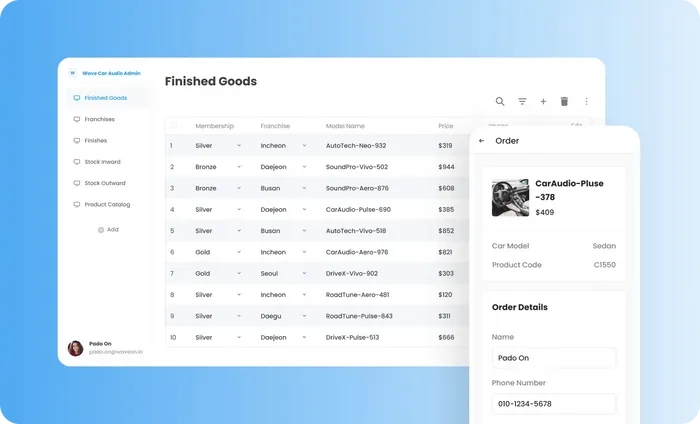
You can connect it with your POS systems, accounting software, and ecommerce platform for efficient operations.
If you need a simpler way to track stock and manage purchase orders without a full ERP, StackCube helps small distributors get up and running in days.
Leverage our inventory management template to kickstart the right way.
2. RFID Tagging
Radio Frequency Identification (RFID) technology lets you track inventory without a direct line-of-sight reader. It uses radio waves to convey data from RFID tags to RFID readers, which process the data and update inventory databases.
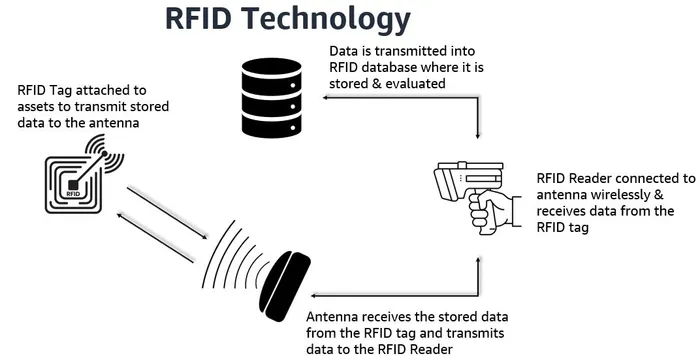
You can place the readers at strategic points like warehouse entry points or checkout areas to automatically detect and update your stock level in real time.
Besides this, the RFID readers let you detect different tagged items concurrently, making the process swift and more accurate. This technology is best suited for high-volume businesses such as retail, logistics, and manufacturing companies.
3. Barcode Scanning
Barcode scanning is one of the most economical and efficient alternatives to using spreadsheets for inventory tracking. It involves assigning a unique barcode to each inventory product. When you scan the barcode, the stock count updates in your system.
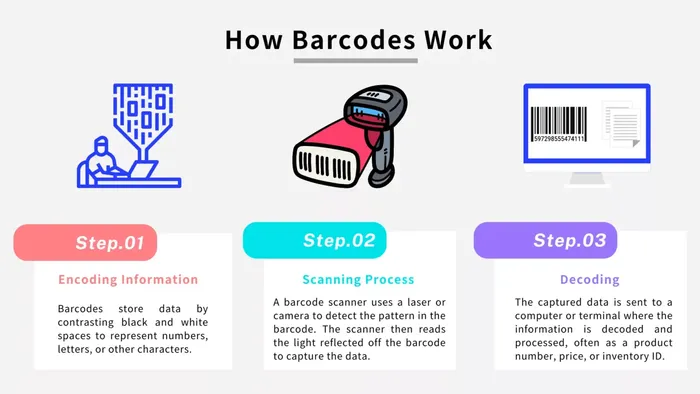
A barcode holds details such as SKU (stock keeping unit), price, and description of the product. You can scan them at the point of sale, receive inventory, monitor and reorder stock, analyze trends, and generate reports.
It lets you swiftly update your stock levels, eliminating manual entry errors. Identify fast-selling products, check your current count, and order what you need to replenish.
4. 3PL (Third-Party Logistics)
3PL handles your inventory storage, tracking, and shipping processes, eliminating the need for in-house inventory management. Rather than managing your warehouse or inventory, you can hire a specialized 3PL company to handle that for you.
3PL will be responsible to receive, store, and ship your products based on customer orders. Their system integrates with your sales channel to ensure swift order processing and real-time inventory tracking.
3PL companies also forecast demand, establish a flexible and responsive supply chain, and provide actionable insights to improve your operations. You can save time and overhead costs while focusing on other strategic business development roles.
The downside of leveraging the services of 3PLs is that you lack a clear view of how your inventory moves through the entire supply chain, as this process is managed offsite.
5. Batch Tracking
Batch tracking involves assigning numbers to groups of manufactured or received products. It categorizes inventory with similar production attributes such as expiry date, manufacturing date, location, and particular parts or raw materials.
The groups are then assigned a unique identifier, mostly a batch number or a lot number. This identifier records and tracks the batch of products through the supply chain. It lets you track the items' expiry dates, monitor defective ones, and efficiently recall products.
Batch tracking is ideal for industries with strict quality control regulations such as pharmaceuticals and food production.
6. Digital Card Systems
Digital card systems are a modern way to track stock movements, log purchases and sales, and preserve precise inventory records without depending on spreadsheets.
They operate in a similar fashion as that of traditional inventory logbooks but in an electronic format. Every product has a unique digital card that records main inventory details such as stock received and sold, current stock levels, and expiration or batch number.
You can either update digital cards manually or integrate them with inventory management tools for automated updates. They are suitable for small businesses that manage a limited range of products.
Embrace Smarter Inventory Management Technologies to Improve Efficiency
Manual tracking is cumbersome, prone to errors, and cannot keep pace with the need for real-time inventory data updates. Spreadsheets and paper logs may have worked in the past, but given the growing business demands, they are now obsolete.
Automated inventory management systems eliminate the inaccuracies and errors in spreadsheets, update data in real time, and are easy to scale. Make the switch today by grabbing our inventory management template to simplify your processes.
Learn more about No-code insights
Subscribe Waveon Newsletter
*Type your email address