Marketing
How To Build A Marketing Automation Funnel: Step-by-Step Guide

Sanchita
12/5/2023
0 min read
Build a funnel!
You might have heard marketing experts repeatedly using this sentence. But it's no longer sufficient to build just a funnel. From advanced analytics to collecting user data to automating emails, automation has become a huge part of marketing today. And that’s where marketing automation funnels are rising in popularity.
So, how do you build one? We will answer all your questions in this blog. To help you understand the basics of the funnel, we have broken down each piece of info into easy-to-understand chunks. So, even as a beginner, you will have clarity on the concepts of the marketing funnel.
Let’s get started.
What is a Marketing Automation Funnel?
The concept of marketing automation is quite new. Almost 85% of B2B marketers think they are not using marketing automation software to its full potential.In simple marketing funnels, marketers mass distribute one content for all audiences. It's like shooting an arrow in the dark.
However, in marketing automation funnel, you leverage the power of automation tools to create hyper-personalized communication with your audience.So, the definition of a marketing automation funnel can be as -“A process of creating a marketing funnel that’s automated through advanced software while also leveraging the data to create highly personalized campaigns”
But what’s the need of a marketing automation funnel?Many marketers have used non-automated funnels successfully for 100s of years. What changed?Firstly, the world has become more digital!An average person today has a point of contact with many devices like phones, TVs, computers, etc.So, you need to be targeting all these platforms if you want to reach your customers today. And automation just makes it easier.
Real-Life Examples of Marketing Automation Funnel - Crazy Egg Case Study
For those who are not aware, Crazy Egg is an analytics platform that’s used to track and optimize website user behavior to improve the overall experience.
Raising Awareness: When Crazy Egg entered the market, it had a limited marketing budget. So, to make the audience aware, they started running Google Ads and also offered a $99 Crazy Eggs account for free to influential blog owners for reviews.
Evaluation Stage: Once they built brand awareness and trust, they started using their blogs to showcase how their product can help improve website conversions. These blogs were boosted by Facebook ads, influencers, and a mailing list.
Purchasing decision stage: In the third stage, they added a ‘Subscribe to Our Newsletter’ button and an interesting video to help customers move down the funnel. Then, through nurturing the leads, they started making software sales.
Marketing Funnel Vs Sales Funnel: What's the Difference?
Often, the terms sales and marketing funnel are used interchangeably. But they are different.To understand the difference between a marketing funnel and a sales funnel, think of how a customer goes from just looking to actually buying.
A marketing funnel is like a map that takes customers through a whole journey with a brand. In short, it's about creating awareness and making customers want to purchase your product or service.On the other hand, the Sales Funnel starts when the marketing funnel ends. The work of a Sales Funnel is to nurture hot leads (ready to buy) and make them buy your product or service.
In short, the bottom of the marketing funnel serves as the entry point for the sales funnel, where activities are driven by what marketing has set up. This back-and-forth builds understanding and makes people want the product or services.
Additionally, sales funnels are more than just closing deals; they focus on building long-term relationships with customers, ensuring satisfaction and potential repeat business.
Marketing Automation Funnel 101: Understanding the Basics
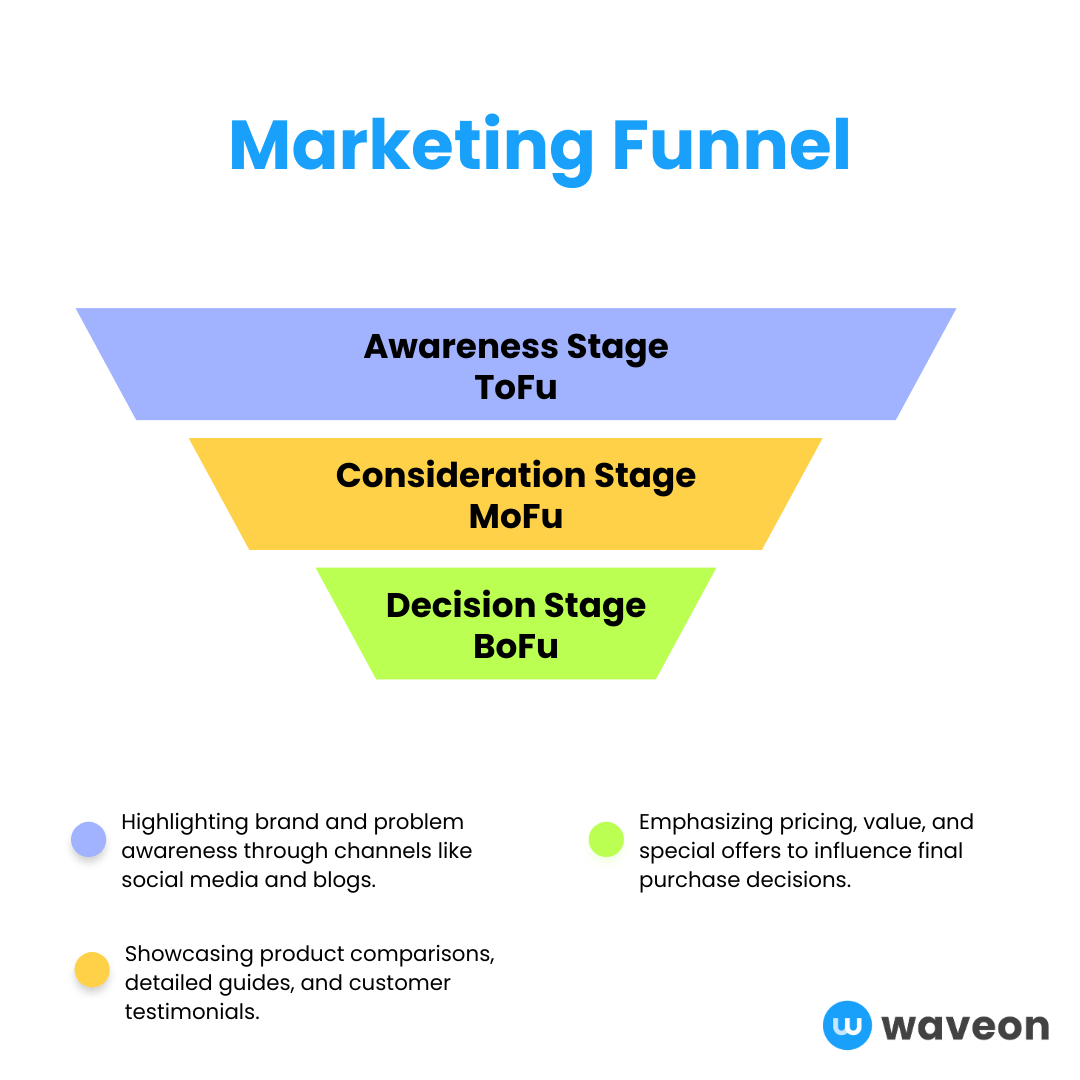
Three Basic Stages of Marketing Funnel
1. TOFU (Top of the funnel)
Characteristics: Broad audience set, very low chance of conversion, lowest value, most efforts.
The main aim of TOFU is to make customers aware of your product or service and start their journey with you.
2. MOFU (Middle of the funnel)
Characteristics: Targeted audience, interest in what you provide, medium value, and efforts.
In this stage, the customer is evaluating options but is not ready to buy anything yet.
3. BOFU (Bottom of the funnel)
Characteristics: Narrow audience set, MQL, or SQL. They are interested in your product/services and have the highest value out of the funnel, ready to buy.
Customers have done their research, evaluated their options, and are not ready to buy.
How To Build a Marketing Automation Funnel?
Stage 1: Recognizing audience needs (TOFU)
This stage comes under the Top of the funnel. Before you start building a funnel, It's important to recognize the needs of your audience. Because if they don’t need your product, they will not buy - now or in the future.
So, how do you find the needs of your audience? Here are six ways to get to know your target audience.
1. Demographics - Demographics are significant, but it is more significant to use them wisely. Demographics will help you fine-tune your marketing message. For example, you will talk differently to 20-year-old vs. 40-year-old people.
2. Psychographics- It is a qualitative market research discipline that is utilized to investigate the psychological characteristics of an audience or target market. Psychographics is an advanced sibling of demographics because it describes your audience in more detail.
Difference Between Demographics and Psychographics | |
Demographic: Melinda is 30 years old with an income of 40,000 USD per year. | Psychographic : She loves building AI models, wants to join the technology industry soon, and is present in many tech forums. |
3. Online analytics - Analytics plays a huge role in marketing. You can analyze your website analytics to understand which people are checking out of your landing pages. Although the above three methods are good at finding your audience's needs, you will need to go deeper to understand your audience better. The next three ways help you do so.
4. Review mining -
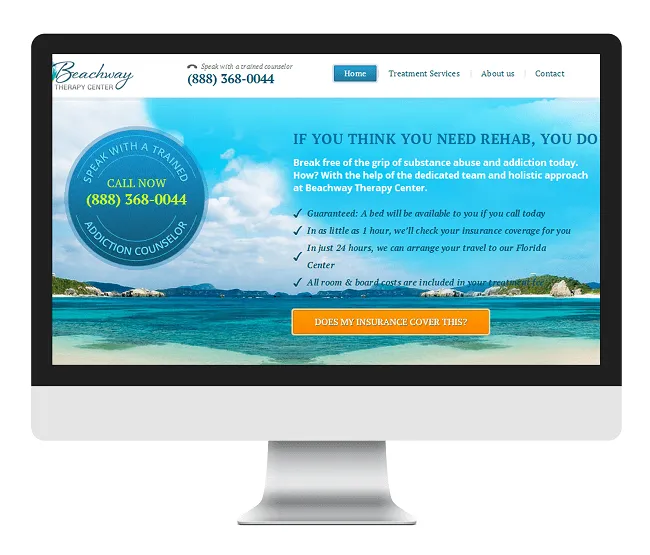
Copywriter Joanna Wiebe got this headline straight out of a customer’s mouth. It was taken from the Amazon review. The headline, “If you need rehab, you do”, drove 400% more clicks.
Online reviews are an excellent source to understand a customer's language. This language, when used in your marketing message, can help you skyrocket your conversation. So, pick a similar product as yours and start searching online customer reviews!
5. Online conversations
What if there are no online reviews? Worry not, online reviews are not only on e-commerce sites. You can also find forums or sites where your target audience is conversing. For example, Reddit, Quora, Facebook groups, and niche forums.
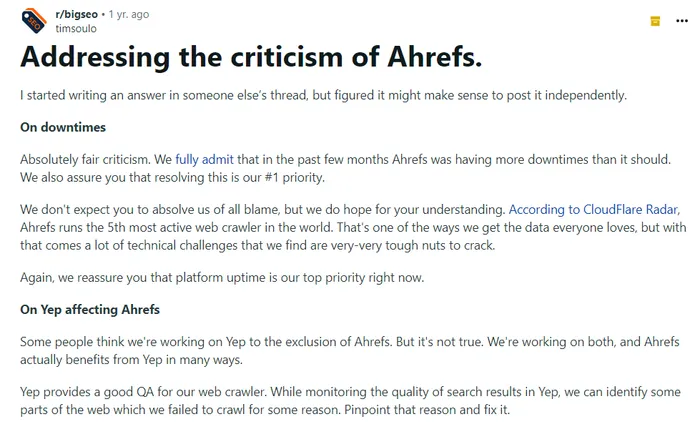
Look at this Reddit post by Tim Soulo, founder of Ahrefs. Redditors were definitely not happy with recent changes in Ahrefs. Tim Suolo started conversion by addressing them in a Reddit post.
6. Live interviews
The above two steps are powerful in their own way, but nothing matches live interviews with real people. You can interact live with your target audience and find out their personal stories and pains in much more detail!
Once you have collected enough data about your audience, it's time to move on to the next stage, awareness creation.
Stage 2: Creating Awareness
In this stage, your potential customer knows that they need a solution. But they have no idea where to find it. Mostly, they are looking for answers. So, in this stage, you work to provide them with information that will help them find answers.
Do’s: Focus must be on providing high-quality information to help them find a solution.
Don’t: Do not force your brand or product on potential customers. They don’t know you at this stage.
Content Ideas for This Stage
How to [solve a problem]
Tips for [for pain point]
Guide to [your industry topics]
Best practices for [using X product or services]
Solutions for [specific industries]
Benefits of [X approach or using your products/services]
Examples:
Tactics to generate awareness?
Using SEO and content marketing - Offer in-depth articles on how products or services benefit them. Use the content ideas given above.
Using social media- Create informational content about your audience’s pain points.
Influencer marketing - Tie up with influencers who have a similar audience to the one you require to create awareness regarding your brand.
Stage 3: Evaluation Stage
In this stage, customers know there’s a solution to their problem. Now, they are looking for more information and want to consider the best product/service for their issue.
Content ideas and keyword research
In this stage, we will use keywords and content with strong purchase intent. Here are some ideas.
[Product/service] reviews
[Product/service] vs. [competitor]
Best [product/service] for [specific use case]
Top-rated [product/service]
Is [your product/service] worth it?
Examples:
Best channels for the stage
Paid ads - Facebook and Google Ads are best. You can reach out to the customers who have visited your site before.
SEO and content marketing- Use the above topics and ideas to create content for your content marketing strategy.
Stage 4: Purchasing decision
Now comes the important stage, the purchasing decision. In the previous stages, you made your customers aware of your brand and developed brand trust. Now, they intend to buy a product that’s best for them.
Content ideas and keyword research
Since the intent is to buy. You can use the following content ideas
Free trial for products or services
Product/service at discounted price
[Product/service] for sale
Best channels for the stage
Ads - Target customers who have shown interest in your product.
Email - Remind them, answer their questions through FAQs, and also provide updates.
Webinars and demos - For those who want to see product demos, you can host live webinars or even do recorded demos so customers can understand how your product or service works.
Stage 5: Advocacy
The journey of the funnel doesn’t end with a customer purchasing your services or product. That’s where stage five comes into the scene. Here, the aim is to inculcate brand royalty. This is because it's cheaper to retain a customer than getting a new one”.
How do you use your current customers to stay loyal and most importantly turn them into your brand advocates?
Let’s find out.
a. Develop a referral program
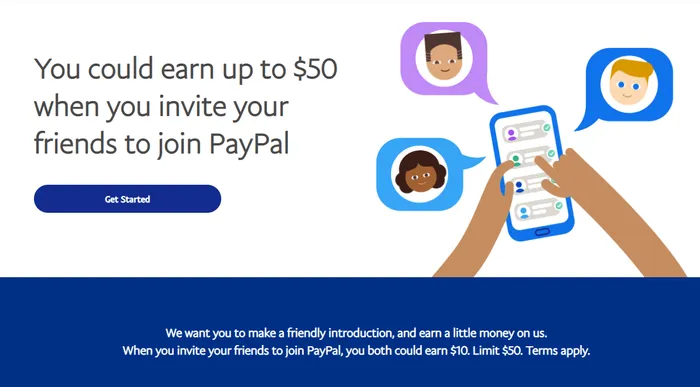
If your customers like your product and service, they will naturally refer it to other customers. Developing a referral system will ensure you get a steady stream of new customers while current customers are rewarded for referring you.
Here’s an example of the PayPal referral system that works wonderfully.
b. Ask Feedback
Improving your product over time is essential. This is because no amount of marketing will make people buy a bad product or service.
Here, too, you have the opportunity to make your current customers feel valuable.
Start collecting customer feedback. You can use automated feedback tools like Qualaroo, TypeForm, CrowdSignal to guide users to leave feedback once they have made a purchase.
How to Measure The Success of Your Automation Funnel?
Measuring the success of your automation funnel is important for optimizing your marketing efforts. Here is a list of activities you can do to understand key metrics at each stage of the funnel.
a. Activity Metrics:
Why track this metric? Activity metrics help you see how well your team engages with campaigns and efficiently use marketing tools for better results.
Activity metrics reflect your team’s engagement and performance. Track the number of new leads, form fills, email sends, campaigns launched, calls made, and sales closed. Ensure your team maximizes marketing automation software for efficient lead management and goal achievement.
b. Response & Engagement Metrics
Why track this metric? : It helps you understand how prospects engage with your content.
Monitor site traffic, landing page metrics, email open rates, click-through rates, and social media interactions. Understand your audience’s response to specific messages and identify areas for improvement by analyzing negative response metrics like lost followers and unsubscribes.
c. Value Metrics:
Why track this metric? : Monitor Value Metrics to understand if your marketing efforts are worth the investment, focusing on different sales areas.
Measure metrics that directly correlate with return on investment (ROI). Focus on conversion rates, marketing qualified leads (MQLs) generated, revenue generated, and cost per lead. Additionally, access the acceptance of MQLs by the sales team and the number of deals closed.
d. Traffic Sourcing & Engagement Stats from Content:
Why track this metric? : Understand the effectiveness of your content in attracting and engaging leads.
Analyze blog page views, session duration, bounce rate, and pages per session. Monitor various content sources' performance to identify areas for improvement. These metrics help you analyze where your website traffic comes from and how visitors engage with your content, measuring how well you attract potential customers.
e. Call to action Effectiveness
Why track this metric? : Tracking Call to Action Effectiveness is essential to improve your website's impact, engage visitors, and boost the chances of turning them into customers.
Measure the click-through rates (CTRs) of your calls to action (CTA) buttons. Conduct A/B split tests to optimize CTA designs and messages. Access the performance of CTAs at different stages of the funnel to ensure a steady flow of leads and identify opportunities for enhancement.
f. Email Click Rates
Why track this metric? : Email click rates help you understand how engaged your audience is with your emails. This helps you refine your communication strategy for better results.
You can understand the email marketing campaign performance by analyzing open rates, click rates, and click-to-open rates (CTOR). If the open rate is declining, it is time to focus on optimizing subject lines. On the other hand, you can use CTOR to gauge the true level of audience engagement and re-engage those who didn't open emails.
Final Words on Marketing Automation Funnel
To create a highly converting funnel, you must put yourself in the customer's shoes.
What are they thinking? What will be their following action?
Also, building a marketing automation funnel is different than a set-it-and-forget-it thing. It takes repeated efforts from your side to refine it occasionally for better conversions.
Last but not least, don’t make the mistake of thinking that you can create a funnel in one day. It's a long process, so you must trust the process.
A practical way to start is to test one focused offer before connecting every automation step. Build a dedicated landing page for the campaign, measure the CTA, form, and follow-up response, and then use that data to refine your marketing automation funnel with less guesswork.
Learn more about No-code insights
Subscribe Waveon Newsletter
*Type your email address