Marketing
AI website builder for small business B2B lead generation: a practical guide

Waveon Team
12/7/2025
0 min read

If you run a small B2B company, your website’s main job is not to “look modern.” Its job is to bring in a steady flow of qualified leads. An AI website builder for small business B2B lead generation can help you do that without hiring a full marketing team or learning to code. In this guide, we will walk through how to plan, build, and improve an AI-powered site that reliably captures and qualifies leads. You will see which AI features matter, how to connect your site to your CRM and sales tools, and how to keep improving results with simple tests and analytics, even if you are wearing five other hats in the business.
If you are just starting to explore no-code tools, you may also want to read a guide to choosing a no-code website platform for small teams and another piece on how AI landing page generators fit into a broader B2B marketing stack, which both connect naturally to what we cover here.
What an AI Website Builder Means for Small Business B2B Lead Generation
Many small B2B teams start with a basic template-based website. You pick a design, drop in some copy, add a generic contact form, and hope people will get in touch. The problem is that these sites are usually organized around pages (“Home,” “About,” “Services”) rather than around specific lead flows. They look fine, but they are not built to guide a visitor from “never heard of you” to “booked a meeting.” Invesp’s 2024 conversion rate data shows that average B2B website conversion rates often sit in the low single digits depending on industry, typically around 2–4% for many verticals, which means every small improvement in your site’s structure and messaging matters a lot for a business with limited traffic (Invesp CRO statistics).

An AI-assisted site, in contrast, can be built around forms, calls to action (CTAs), and specific lead capture flows from the start. Instead of a single “Contact us” link, you can use the builder to generate dedicated landing pages for each offer or segment, each with its own tailored headline, proof, and form. The AI can suggest where to place CTAs on a page, which sections to include to build trust, and how to simplify your forms so more people complete them. The result is a site that behaves more like a set of targeted campaigns than a static brochure.
Copy, layout, and conversion-focused page structures are usually where small B2B teams struggle most. You may know your product well but still stare at a blank page when it is time to explain it clearly to a specific decision-maker. Modern AI website builders can generate first-draft headlines, benefit-led body copy, FAQ sections, and even visual layouts from a short description of your offer and audience. You can then edit the tone and details so it sounds like you, instead of starting from scratch every time. This is especially useful when you do not have a full-time marketer or designer and need to spin up new pages quickly.
AI also fits into the broader B2B lead generation process, not just page creation. HubSpot’s marketing statistics note that a company’s website, blog, and SEO efforts are still among the top channels driving ROI for B2B brands in 2024 (HubSpot marketing statistics). That means your AI site needs to support the entire journey: attracting the right visitors, capturing their details with relevant offers, qualifying them with smart forms or chat, and then passing the right information into your CRM so sales can follow up. When you think of an AI website builder for small business B2B lead generation, think of it as a hub that both creates and coordinates this journey, rather than just a page designer.
Planning a Lead Generation Strategy Before You Build the Site
Before you open an AI website builder, you will get much better results if you are clear about who you want to attract and what you want them to do. AI works best when it has strong inputs. If you simply tell it “build me a B2B website,” you will get something generic. If you say “build a site for an IT services firm helping CFOs at manufacturing companies reduce downtime by 20%,” the AI can produce more focused copy, layouts, and offers.
Start with your ideal B2B customer profile. Think about the types of companies that get the most value from your product or service: industry, size, location, and common triggers that make them look for help. Then identify the decision-makers and influencers who will visit your site. For example, if you sell a SaaS tool for compliance, your visitors might be heads of compliance, legal directors, and sometimes CFOs. Each of these people cares about slightly different problems. Write down the top two or three problems that your site must speak to for each role—things like “reduce audit risk,” “save internal team time,” or “avoid costly errors.” These problem statements will become prompts for your AI copy.
Once you know whom you are talking to, you can map key pages and funnels. Instead of one generic “Services” page, plan a series of focused landing pages aligned to industries, use cases, or stages of awareness. A small HR consultancy, for instance, might have separate pages for “HR support for early-stage startups,” “HR audits for manufacturing,” and “Retained HR for professional services.” Each page can be built with AI to speak directly to that segment. You can also plan a core lead magnet or “entry offer” for each funnel, such as a free audit, a calculator, a checklist, or a 30-minute strategy call. These offers are what you will anchor your forms and CTAs around. If you are running paid campaigns, you can link each ad group to a tightly aligned AI-generated landing page to keep your message consistent from click to form submission.
It also helps to set measurable goals before you publish anything. Decide how you will judge success: number of leads per month, percentage of visitors who complete a form, or number of booked calls from specific pages. For many small B2B sites, starting with a target of 2–3% visitor-to-lead conversion is reasonable, with an eye toward improving over time as you test. If you know you need ten qualified opportunities a month to hit your revenue targets, you can work backward to estimate how many form fills and how much traffic you need. This clarity makes it easier to use your AI builder’s analytics and testing tools later, because you will know what you are optimizing for.
To make this planning more concrete, it helps to see how the pieces fit together across the funnel. The table below summarizes a simple but effective structure you can aim for when you are planning your AI-assisted B2B site.
| Funnel stage | Main page or asset | Primary call to action | Key data to capture | How AI can help at this stage |
|---|---|---|---|---|
| Awareness | Blog posts or SEO landing pages | Download a helpful guide or checklist | Email, role, industry | Generate SEO-friendly content and suggest relevant lead magnets. |
| Consideration | Problem-focused service or solution pages | Book a consultation or product demo | Company name, size, main challenge | Draft targeted copy and tailor sections to each industry or use case. |
| Evaluation | Case study or comparison pages | Request a detailed proposal | Budget range, timeline, decision role | Turn raw notes into clear case studies and comparison summaries. |
| Decision | Pricing or offer-specific landing pages | Sign up, start trial, or schedule call | Phone, preferred contact time, urgency | Test different pricing explanations, headlines, and CTAs to lift response. |
| Post-conversion | Thank-you pages and follow-up email flows | Join webinar, upsell, or referral offer | Product interest, additional use cases | Write nurture emails and recommend next offers based on past behavior. |
When you map your site this way, the AI builder stops being a generic “page creator” and instead becomes a tool you use at each stage of the funnel. You can then brief the AI with much clearer prompts, such as “Create a consideration-stage landing page for HR directors in tech startups, offering a 30-minute compliance audit,” rather than hoping it guesses what you need. If you later decide to expand into more advanced tactics like multi-step funnels or account-based marketing, this same structure will make it easier to plug in additional no-code tools alongside your AI website builder.

Essential AI Features for Capturing and Qualifying B2B Leads
Not all AI website builders are equal when it comes to lead generation. Some focus mostly on automatic design; others go deeper into content, forms, and optimization. When you are choosing and using an AI website builder for small business B2B lead generation, you want features that help you attract, capture, and qualify leads with as little manual heavy lifting as possible.
One of the most practical uses of AI is generating and testing headlines, page copy, and CTAs for specific B2B segments. You can create prompts based on your earlier planning, such as “Write three benefit-focused headlines for a landing page aimed at HR directors in tech startups who are worried about compliance as they scale.” The builder can then offer variations you can test against each other. Over time, you can ask the AI to analyze which messages resonate based on conversion data and suggest new angles. This is a big advantage for small teams, because you do not need a copywriter to draft multiple options for each campaign.
Another powerful area is AI-driven forms, chatbots, or quizzes that ask qualifying questions and route leads appropriately. Chatbots are especially relevant in B2B. A 2024 review of lead generation and chatbot statistics notes that chatbots have become mainstream, with a large share of B2B companies using them as part of their lead generation and customer service stack, and many reporting higher lead volume and faster response times (Martal Group statistics). On your site, an AI chatbot can ask a few intelligent questions—company size, budget range, main challenge—and based on the answers, either suggest a resource, book a call, or route the lead to the right sales rep. This saves your team time sifting through unqualified inquiries and gives prospects a more tailored experience.
Quizzes and smart forms work similarly. Instead of a generic “Name / Email / Message” form, you can design a short questionnaire that helps the visitor self-segment by role, company size, and current priorities. The AI builder can help you phrase these questions clearly and suggest the minimum set needed for effective qualification. You can then map answers to CRM fields or lead scores, which we will cover shortly. If you also run webinars or downloadable resources, the same AI-driven forms can tailor follow-up content recommendations based on each prospect’s answers so they are not all dropped into the same generic nurture sequence.
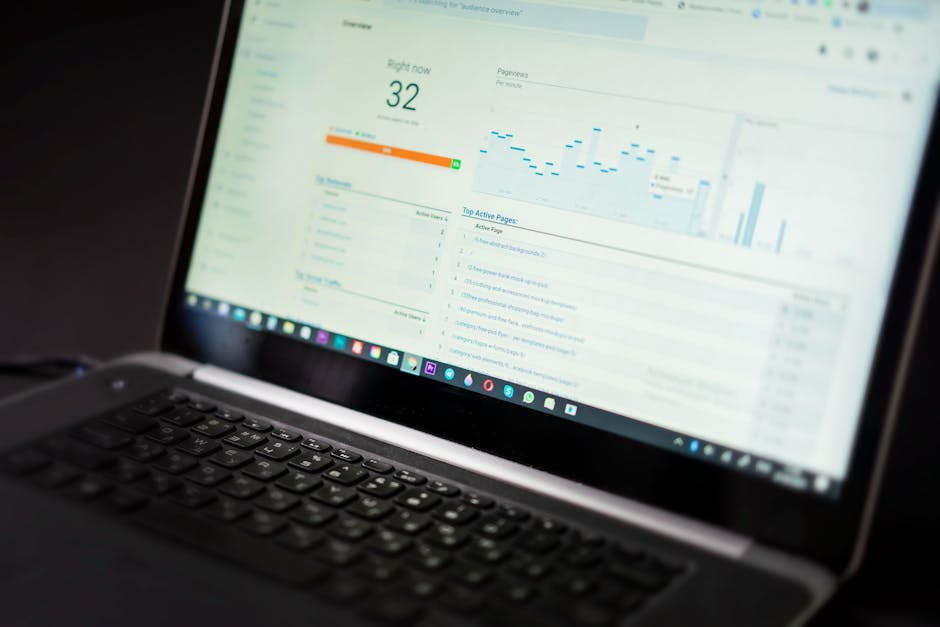
Finally, you want built-in analytics and AI-driven suggestions to improve conversion rates over time. Tools that track form completions, button clicks, scroll depth, and page performance can feed insights back into the AI. For instance, if the AI sees that visitors drop off halfway down a long landing page, it might recommend moving your primary CTA higher or shortening sections. Research from Portent on site performance and conversions shows that technical factors like speed and structure can significantly affect B2B conversion rates; they found that faster-loading pages can generate many more conversions than slow ones, especially when you are paying for traffic (Portent site speed research). An AI builder that highlights such issues and offers concrete fixes is especially valuable when you do not have in-house analytics expertise, and it complements any conversion optimization work you may already be doing on your core landing pages.
Connecting Your AI Website Builder to CRM and Sales Tools
For B2B lead generation, a website that collects leads but does not pass them cleanly into your CRM is only doing half the job. Your AI website builder for small business B2B lead generation should make it easy to sync form submissions and chatbot conversations into the tools your sales team already uses. This is where you turn anonymous visitors into tracked opportunities with context your team can act on.
When you connect forms and chat to your CRM, focus on mapping the key fields that matter for qualification and follow-up. Basic contact details such as name, email, and company are obvious, but think beyond that. If your form asks about company size, industry, or primary challenge, make sure those answers land in dedicated CRM fields rather than a generic “notes” section. That way, your sales team can filter and prioritize leads quickly instead of reading through long comments. If your AI chatbot collects additional context during a conversation, look for an integration where transcripts or key data points are attached directly to the contact record so your team sees the full history in one place.
Next, connect your site to email tools, meeting booking tools, and any marketing automation you use. One of the biggest advantages of modern B2B stacks is the ability to trigger timely, relevant follow-ups automatically. Dashly’s chatbot and automation statistics highlight that businesses using chatbots and automation often see faster response times and improved lead engagement, which is vital when buyers are comparing options and expect quick answers (Dashly chatbot statistics). Your AI-built site can send a follow-up email series whenever someone downloads a guide or requests a demo, or it can present a calendar widget right after a form submission so the prospect can book a call without back-and-forth emails. This kind of automation is where even a small team can feel “always on” to prospects.
Tagging and lead scoring rules are the final piece that help sales focus on the most promising B2B prospects. In your CRM or automation tool, you can set up rules such as adding a “High Intent” tag when someone visits pricing, fills out a detailed assessment form, and has more than a certain number of employees, or assigning a higher score to leads from target industries. Your AI builder can support this by adding tags based on which page or offer generated the lead and which answers they chose in forms or chat. Over time, you and your sales team can adjust these rules based on what actually converts into revenue. This tight feedback loop is what turns a website into a predictable lead engine rather than a source of random inquiries, and it pairs well with any sales playbooks or pipeline review processes you already have in place.

How to Evaluate and Choose an AI Website Builder for B2B Leads
With many AI website tools on the market, it can be hard to know which one will really help your small B2B business generate leads rather than just a prettier site. It helps to think of your evaluation process as testing three big areas: how well it helps you create B2B-focused pages, how the pricing and limits fit your stage, and how easily it plugs into your existing tools and skills.
Start by looking at each tool’s templates, AI assistance, and landing page options for B2B offers. Does it have templates designed for lead generation, such as webinar registrations, product demos, consultation booking pages, and gated content? Can you tell the AI who your audience is and what outcome you want, and get back a complete page framework with relevant sections like pain points, case studies, and FAQs? Pay attention to how much editing you need to do to make the output sound like your brand and address your niche. If everything feels generic and consumer-focused, it may not be the best fit for B2B. Tools like Waveon’s AI Website Builder, for example, are designed to generate conversion-focused landing pages for specific offers and make it easier for non-technical teams to deploy multiple variations quickly, which is the type of capability you want to look for, even if you end up choosing another platform.
Pricing, limits, and scalability come next. Many small businesses underestimate how many pages they will eventually need. You might start with one main landing page, but soon you will want dedicated pages for different industries, campaigns, and partnerships. Check how many pages, domains, and monthly visitors are included in each pricing tier. Look at whether AI content generation has usage caps and whether you will pay extra as you test more variations. B2B marketing statistics from 2024 show that budget pressure is real, with many B2B marketers dealing with leaner teams and tighter ROI expectations (VIB B2B lead generation statistics). You want a tool that gives you room to grow without surprise costs every time you launch a new campaign or spin up a new lead magnet.
Finally, review integrations, support, and learning resources. For a non-technical team, documentation and support can make or break your experience. Check if the builder integrates natively with your CRM, email platform, calendar booking tool, and analytics. If it does not, see whether you can connect via tools like Zapier or Make. Also look for tutorials or playbooks focused on B2B lead generation, not just design tips. Some platforms offer pre-built funnels, best-practice templates, and examples from similar businesses, which can help you move faster and avoid rookie mistakes. If you are already using a no-code stack for other parts of your business, look for an AI website builder that fits neatly into that ecosystem so you are not constantly jumping between disconnected tools or dealing with complex workarounds.
Launching, Testing, and Improving Your AI-Powered Lead Gen Site
Launching your site is not the finish line; it is the start of a cycle. The good news is that an AI website builder for small business B2B lead generation makes it much easier to iterate quickly. The key is to start simple, use the built-in testing tools, and review your analytics regularly so you can make small, targeted changes rather than big, risky overhauls.
A practical rollout plan is to start with one core offer and a focused landing page. Instead of trying to redesign your entire site at once, pick your highest-value, easiest-to-sell offer—often a free consultation, demo, or assessment. Use the AI builder to create a dedicated landing page for that offer aimed at your best-fit segment. Make sure the page has a clear headline, short explanation, proof or results, and a simple form or booking widget. Then drive some traffic to it via email, LinkedIn, or small paid campaigns. Once you see this page converting reliably, you can clone the structure and adapt it for other segments or offers, which is where AI can save you hours of rewriting from scratch.
From there, use simple A/B tests on headlines, forms, and layouts. Many AI builders can automatically generate alternate headlines or button texts and handle the split test for you. You might test a benefit-focused headline versus a more problem-focused one, or a short form with three fields versus a longer one with more qualification questions. A chatbot statistics review from Outgrow notes that a large share of chatbots are now used specifically for lead generation and that B2B companies are adopting them heavily to increase conversions and speed up responses (Outgrow chatbot statistics). That same mindset—experimenting with how you engage visitors—is what you want to apply across your site. Use the AI’s suggestions as starting points, but always look at your own data before deciding what works.
Plan to review your analytics monthly. Look at which pages attract the most traffic and which ones actually convert. Check bounce rates, form completion rates, and time on page. If a certain industry-focused landing page gets visitors but few leads, you might ask the AI to rewrite sections with a different angle or add a more compelling case study. If a particular form has a high drop-off rate, consider removing one or two fields or converting it into a conversational chatbot. Also review your follow-up workflows: are leads getting an immediate confirmation email, a useful next step, and an easy way to book a meeting? Small improvements here can have a big impact on pipeline, because the faster you respond to a qualified inquiry, the more likely you are to win the deal.
Over time, you can expand your testing beyond individual pages and forms. You might experiment with different offers altogether, such as comparing the performance of a “Free Audit” versus a “Benchmark Report,” or you might test segment-specific landing pages against one general page. Because AI website builders make it fast to spin up and adjust these versions, you can run more experiments than you could by hand, even with a small team. The goal is to treat your site less like a one-time project and more like an ongoing campaign that you tune every month based on evidence.
A simple example of this process in action
Imagine a small B2B IT services firm that had a basic five-page brochure site and relied mostly on referrals. They adopted an AI website builder and followed the approach above. First, they defined their primary segment as manufacturing companies with 50–200 employees struggling with downtime. They asked the AI to create a landing page for a “Free Downtime Risk Audit” aimed at operations and IT managers, with a short form to request the audit. Within a week, they had a polished page with relevant copy and visuals that clearly linked their service to reduced downtime and cost savings.
Next, they added an AI chatbot that popped up on the landing page and asked a few qualifying questions about company size, current downtime frequency, and existing IT support. The chatbot passed responses to their CRM with a simple lead score so the owner could prioritize callbacks. Over the next two months, they tested different headlines and button texts using the builder’s AI suggestions, adjusted the form length, and refined their email follow-up sequence to feel more personal. The result was a steady flow of several qualified leads a week from a single core offer, giving them the confidence to roll out similar pages for other segments. You can extend this same process to additional offers, such as managed security or cloud migration assessments, until the site feels less like a static brochure and more like a portfolio of targeted B2B funnels.

A Quick Step-by-Step Checklist to Apply This Guide
By this point you have seen the main concepts, but it helps to have a simple checklist you can refer back to when you are actually building or rebuilding your site. Think of this as a light project plan you can work through over a few days or weeks, depending on your schedule.
- Define your best-fit B2B customer profile, including industries, company sizes, and the main roles you are targeting.
- List the top two or three problems or outcomes that matter most to each decision-maker visiting your site.
- Choose one core lead offer, such as a free audit, consultation, or demo, that is easy for prospects to say yes to.
- Use your AI website builder to generate a focused landing page for that offer, and then edit the copy so it sounds like your brand.
- Add a simple but structured form or chatbot that collects basic contact details plus one or two qualifying questions.
- Connect your forms and chat to your CRM, email tool, and calendar so new leads are captured and followed up automatically.
- Launch the page and drive initial traffic from email, LinkedIn, or small paid ads aimed at your best-fit audience.
- Set up at least one A/B test on a headline, CTA, or form length and let it run until you have enough visits to see a pattern.
- Review your analytics after a few weeks, identify the weakest point in the funnel, and ask the AI to suggest specific improvements.
- Once your first funnel works reliably, clone the approach for another segment, industry, or offer and repeat the optimization cycle.
This checklist is not meant to be overwhelming; you can move through it in stages. Even if you only complete the first five steps in your first month, you will be ahead of most small B2B sites, which often stop at launching a generic homepage. As you repeat this cycle with the help of your AI builder, you will gradually build a set of proven funnels that keep your pipeline full. If you want a more detailed breakdown of the build phase itself, you can pair this checklist with a separate tutorial on step-by-step AI landing page creation to guide your day-to-day work.
Conclusion: Turn This Guide Into a Concrete 30-Day Plan
You have seen how an AI website builder can move your site from “nice-looking brochure” to a practical B2B lead engine. The value does not come from AI for its own sake; it comes from combining clear positioning, focused offers, and simple, repeatable workflows that your small team can actually maintain.
If you want to put this into practice without getting stuck, treat the next month as a short project with three clear outcomes. In week one, nail your basics: write down your best-fit customer profile, list the key problems you solve, and choose one core offer such as a consultation, demo, or audit. In week two, use your AI builder to create a single, focused landing page for that offer, add a form or chatbot with one or two qualifying questions, and connect it to your CRM and calendar. In weeks three and four, send real traffic to that page, review the numbers once a week, and run at least one simple test on your headline, CTA, or form length.
Once that first funnel is working at a level you are comfortable with, resist the urge to add ten more pages straight away. Instead, clone what already performs: adapt the same structure to a second segment or offer, reuse the same email follow-up, and let the AI help you localize copy for each audience. Over time, this gives you a small portfolio of proven pages, each doing one clear job in your pipeline, instead of a single generic homepage trying to do everything.
You do not need a big marketing team to get this right. You need one or two people who are willing to look at the data once a month, make small edits, and let the AI handle the heavy lifting on copy, layouts, and testing. If you are starting from scratch and want to move faster, using a purpose-built AI website and landing page builder like Waveon can shorten the distance from idea to live funnel, especially if you are not technical.
The most important next step is simply to start. Pick your core offer, spin up that first AI-generated landing page, and connect it to your CRM. Everything else in this guide becomes much easier once you have real visitors, real leads, and real conversations to learn from.

Referenced external sources
For further reading and to validate the statistics mentioned above, you can explore:
- Invesp: Conversion Rate Optimization statistics
- HubSpot: Latest marketing statistics
- Portent: Research on site speed and revenue impact
- Martal Group: B2B lead generation and chatbot statistics
- Dashly: Chatbot statistics and trends
- Outgrow: Vital chatbot statistics
- VIB: B2B lead generation statistics
Learn more about No-code insights
Subscribe Waveon Newsletter
*Type your email address