Insight
Vibe Coding Tools: 5 Best Picks for 2026

Waveon Team
9/30/2025
0 min read
Vibe coding tools change quickly, especially around pricing, model access, and included usage. Use this comparison as a practical starting point, then verify each vendor page before purchase. If your main goal is not repository-level coding but fast campaign and landing page execution, Waveon AI Landing Page is the most directly relevant option in this list.
Vibe coding tool — Cursor
Overview
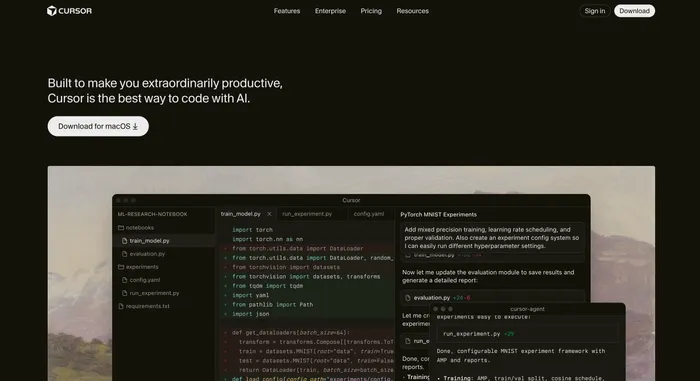
Cursor is an AI-first code editor and assistant designed to speed up development workflows with in-editor code generation, smart code review, and automated fixes. It aims to be a one-stop environment for developers who want conversational help without leaving their code.
Advantages
Tight editor integration and fast, contextual suggestions.
Built-in review automation and PR-focused workflows that lower review friction.
Free tier for casual use and student discounts available.
Disadvantages
Advanced usage and higher-volume teams may find the paid tier pricey.
Heavy or custom enterprise workflows sometimes require extra configuration.
Key features
Smart code completion and in-editor AI assistant.
Automated code review (Bugbot) and PR analysis.
Integrations with GitHub and common developer tooling.
Pricing
Cursor offers a Free tier and paid Pro/Team plans; public pricing shows Pro around $40/user/month with specialized team tiers and add-ons. (Cursor)
Vibe coding tool — Claude Code
Overview
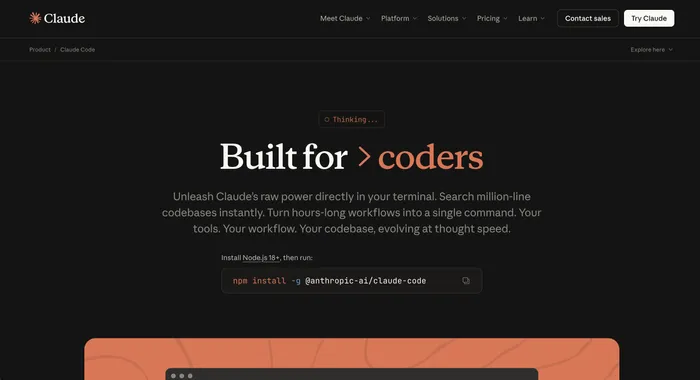
Claude Code (Anthropic) is Anthropic’s agentic coding capability built on its Claude family of models. It focuses on higher-reasoning tasks, multi-step code generation, and agentic workflows that can orchestrate sequences of actions across repositories. The Claude platform also offers Pro and Team subscriptions that unlock extended reasoning and agent modes. (Reuters)
Advantages
Strong reasoning and stepwise problem solving — useful for complex refactors and architecture-level tasks.
Integrates with Anthropic’s broader Claude capabilities (chat, long-form reasoning).
Disadvantages
Can be more expensive for heavy command/agent usage; costs for extended code runs can add up in real-world scenarios.
Less frictionless for tiny tweak workflows compared with lightweight editor plugins.
Key features
Agentic coding workflows that can run multi-step tasks across a repo.
Tuned for reasoning-heavy tasks like debugging, complex algorithm design, and multi-file changes.
Pricing
Anthropic offers Free and Pro tiers (Pro typically around $17–$20/month with annual discount options), and Claude Code access is tied to paid tiers or specific seat-level entitlements for team/premium plans. Note that agentic / API usage is billed separately and may vary by task. (claude.com)
Vibe coding tool — OpenAI Codex
Overview
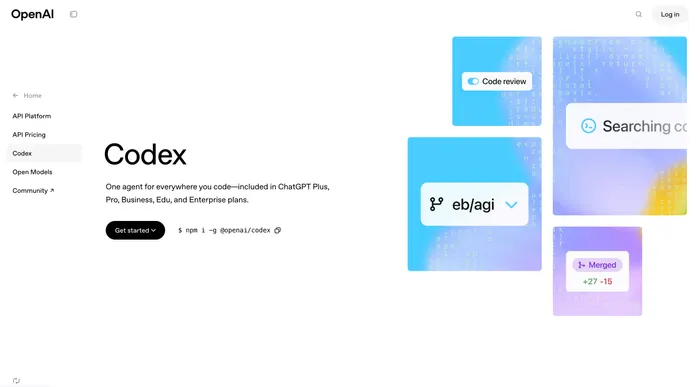
OpenAI’s Codex (the specialized coding agent) is positioned as a coding-first agent included within OpenAI’s developer tooling and ChatGPT subscription tiers. Codex is designed to assist with writing features, fixing bugs, and performing programmatic tasks across a codebase, and is being distributed as part of broader ChatGPT/Codex offerings. (OpenAI)
Advantages
Backed by OpenAI’s large-code understanding, deep integration in the ChatGPT ecosystem.
Included access for users on many ChatGPT subscription tiers makes it easy to test.
Disadvantages
Historically, Codex capability and pricing have shifted as OpenAI refines distribution; certain enterprise or pay-as-you-go usages may require separate arrangements.
For some specialized agent or infra tasks, customers need careful controls to avoid unexpected cost from heavy API use.
Key features
Multi-file code edits, pull-request style suggestions, repository-aware actions.
Works both locally and in cloud sandboxes depending on plan.
Pricing
Codex functionality is currently included for many ChatGPT subscription plans (Plus, Pro, Team, Enterprise), with usage limits varying by plan. For pay-as-you-go cloud or API usage, refer to OpenAI’s developer pricing as it may change. (OpenAI)
Vibe coding tool — Lovable.dev
Overview
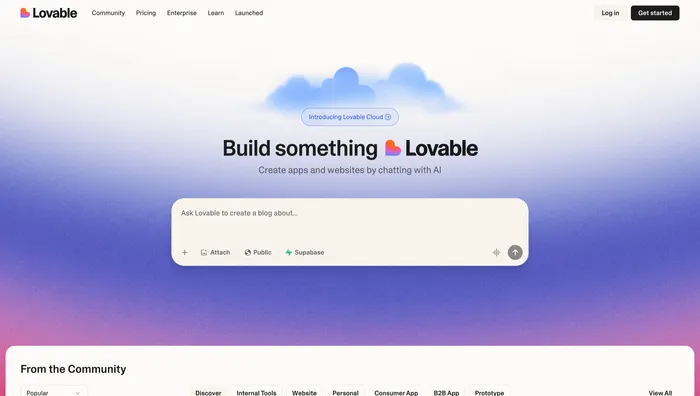
Lovable.dev focuses on generating full-stack web apps and prototypes from natural-language prompts. It’s aimed at product teams and builders who want to bootstrap UI + backend scaffolding quickly and iterate on a working prototype.
Advantages
Rapid prototyping of full-stack apps (front end + simple backend).
Collaboration and public project sharing make it easy for teams to iterate and showcase prototypes.
Disadvantages
Not intended as a replacement for a production-grade engineering stack for complex or large-scale apps.
Credit-based usage may constrain heavy automated builds without upgrading.
Key features
Natural-language app generation, deployments, GitHub sync, and credit-based usage model.
Supports collaborative workspaces and private projects under paid plans.
Pricing
Lovable.dev provides a Free tier with limited credits and Pro plans starting around $25/month (with Team/Business tiers for higher usage). (lovable.dev)
Vibe coding tool — Waveon
Overview
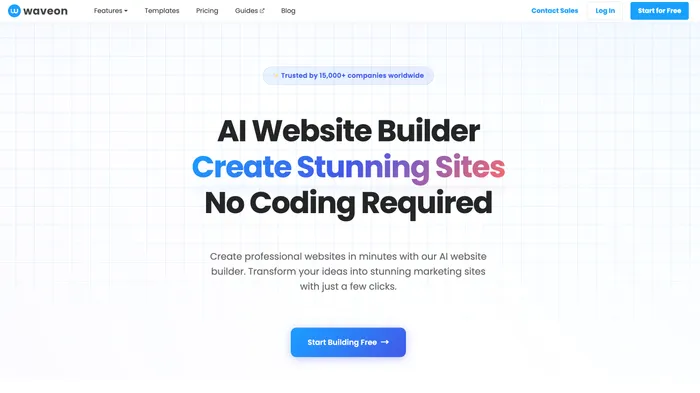
Waveon is an AI website and landing-page builder optimized for marketers and product teams that want to construct conversion-focused landing pages, marketing sites, and lead-collection flows quickly via conversational AI. Waveon emphasizes speed, conversion templates, and integrations for lead capture and analytics. (Waveon)
Advantages
Extremely fast landing page / marketing site creation through conversational AI.
Built-in lead collection, Google Sheets integration, simple database, and conversion-oriented templates — ideal for marketing campaigns and short-run funnel pages.
Low barrier to entry for non-engineers who still require modern, conversion-optimized pages.
Disadvantages
Not designed for complex product-grade web apps, games, or heavy backend logic.
Customers needing bespoke engineering or complex server-side flows may need to pair Waveon with other services.
Key features
AI chat-driven site builder, conversion-focused templates, real-time analytics and heatmaps, seamless lead management and Google Sheets / database integrations.
Export, Figma/HTML integration, and simple logic/automation for marketing pages. (Waveon)
Pricing
Waveon offers entry-level and paid options for teams that need to publish AI-assisted landing pages and marketing sites. Check Waveon’s current pricing page for the latest plan matrix, feature limits, and team or enterprise options. (Waveon)
Why Waveon might be the best choice for marketers seeking a vibe coding tool
If your primary goal is to create marketing pages, landing pages, and lead funnels quickly with the minimum engineering overhead, Waveon focuses exactly on that use case — combining conversational AI editing, lead capture integrations, and conversion-optimized templates.
Its feature set and pricing make it attractive for growth teams and startups that need rapid iterations and A/B testing without building infrastructure from scratch. (Waveon)
How to pick the right vibe coding tool for your team
Need vs. scale — If you need full product engineering and complex multi-component systems, a coding-first tool like Cursor or Codex (integrated into developer workflows) will suit you better. If you need marketing pages with fast time-to-live, Waveon or Lovable.dev are more appropriate. (Cursor)
Cost predictability — Agentic coding (Claude Code) and heavy API-driven runs can be expensive for continuous automation; check per-command / per-token billing before committing. (Reuters)
Integration needs — Choose tools that integrate with your stack (GitHub, Google Sheets, analytics). Waveon’s lead and analytics integrations reduce manual wiring for marketers. (Waveon)
Team composition — Product-led growth teams with less engineering headcount often benefit most from no-code/AI builders (Waveon, Lovable). Developer-heavy teams may prefer Cursor or Codex.
Comparison at a glance (quick reference)
Tool | Best for | Standout capability | Typical starting price |
|---|---|---|---|
Cursor | Developer workflows | In-editor AI + PR automation | Free → Pro ≈ $40/user/mo. (Cursor) |
Claude Code (Anthropic) | Complex reasoning & agentic coding | Agentic multi-step repo workflows | Pro seats ≈ $17–$20/mo; agent/API usage billed separately. (claude.com) |
OpenAI Codex | Broad coding assistance | ChatGPT/Codex integration across tools | Included in ChatGPT subscription tiers; see OpenAI plans. (OpenAI) |
Lovable.dev | Rapid full-stack prototypes | NL→full-stack app generator | Free → Pro ≈ $25/mo. (lovable.dev) |
Waveon | Landing pages & marketing sites | AI chat builder + lead capture & templates | Free and paid options are available; verify current plan details. (Waveon) |
Final recommendation & CTA
Use the related guides below for broader AI website builder context after choosing the tool category that matches your immediate workflow.
Selecting the right vibe coding tool depends on whether your priority is developer productivity, agentic coding, prototype speed, or marketing performance.
For engineering teams that need deep repository-level assistance, Cursor, Claude Code or Codex are strong contenders.
For marketing teams and growth-driven campaigns that require fast, high-converting landing pages with minimal engineering overhead, Waveon stands out for its conversational builder, templates, and lead integrations.
If your immediate objective is to increase campaign velocity, capture leads quickly, and iterate landing pages without engineering lift, try Waveon and see how fast you can launch a conversion-optimized page, then choose the plan that matches your campaign volume and team needs when you are ready to scale. (Waveon)
Learn more about No-code insights
Subscribe Waveon Newsletter
*Type your email address